
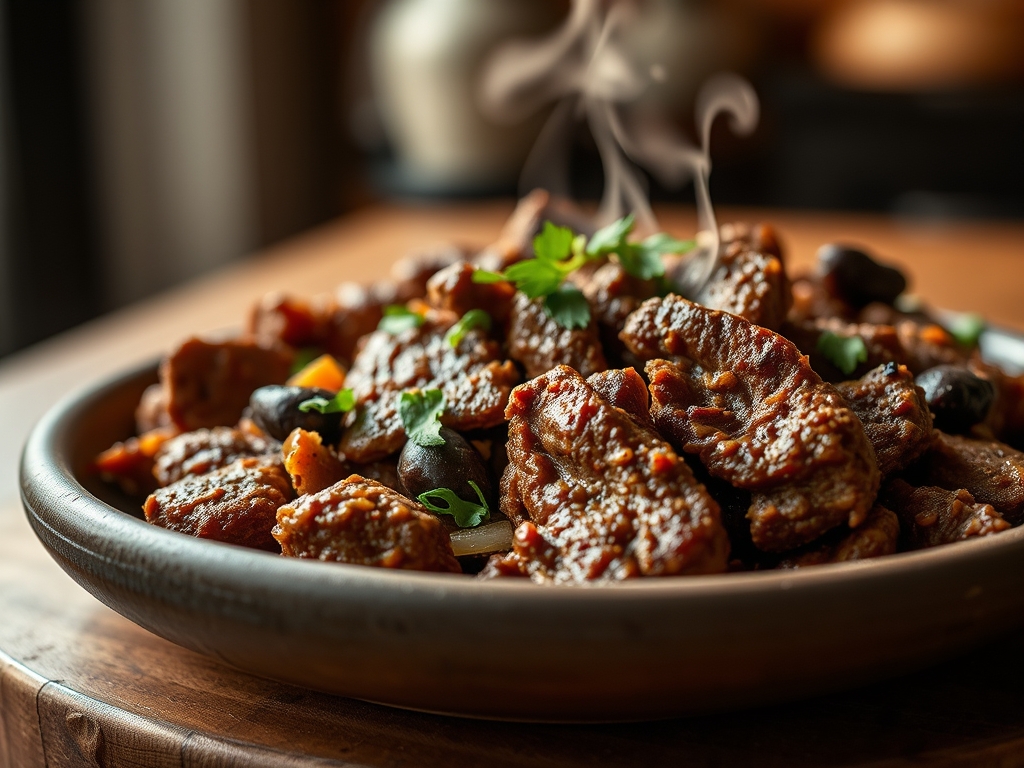
Picture the scent of hickory wood smoke dancing with the rich, iron-heavy aroma of searing protein. It is a sensory collision that turns a humble Tuesday night into a backyard masterclass. While most people relegate their smokers to massive briskets or ribs, the real magic happens when you leverage the surface area of ground meat. Mastering smoked ground beef recipes is not just about heat; it is about managing the intricate chemistry of fat and smoke.
The beauty of this technique lies in the texture. Unlike the grey, boiled consistency of stovetop browning, smoking ground beef creates a mahogany crust that locks in moisture while infusing every fiber with a deep, woody soul. Whether you are crafting a smoked meatloaf or a deconstructed burger bowl, the goal is a perfect balance of salt, smoke, and succulence. We are moving beyond the basic patty and into a world where low and slow meets high-intensity flavor.
The Gathers:
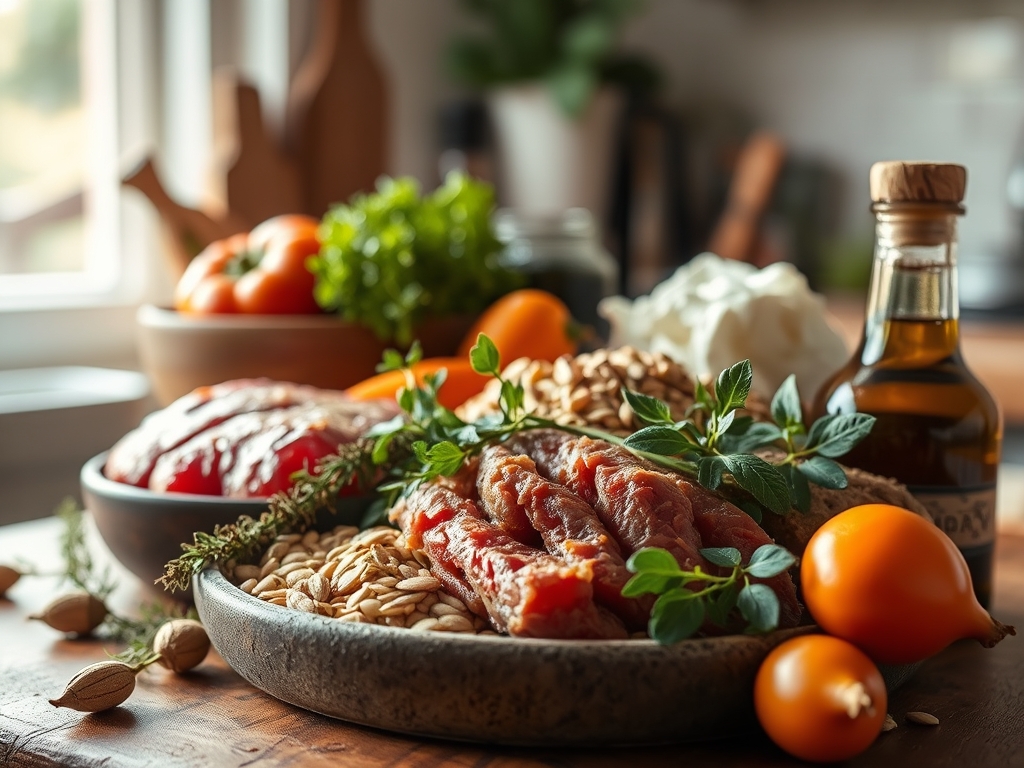
To achieve elite results, your mise-en-place must be precise. Start with a high-quality ground chuck, ideally an 80/20 fat-to-lean ratio. This specific ratio is critical because the fat acts as a thermal insulator and a flavor carrier for smoke-soluble compounds. You will need a digital scale to ensure uniform portions; consistency in mass equals consistency in cook time.
Lay out your dry rub components: kosher salt, cracked black pepper, smoked paprika, and garlic powder. Use a microplane to grate fresh aromatics like onion or garlic if you are incorporating them directly into the meat. This creates a fine paste that distributes evenly without creating structural weak points. For the liquid profile, have a bottle of Worcestershire sauce or a high-quality saucier filled with a vinegar-based mop sauce to keep the exterior from drying out.
Smart Substitutions: If you are looking for a leaner profile, blend 90/10 beef with finely minced mushrooms. This "blended burger" technique uses the mushroom's umami-rich polysaccharides to mimic the mouthfeel of fat. For a piquant kick, swap standard salt for smoked Maldon sea salt to double down on the atmospheric depth.
The Clock
Efficiency in the kitchen is what I call the "Chef's Flow." For most smoked ground beef recipes, you are looking at a total time investment of about 90 minutes. Prep takes roughly 15 minutes of active work; this includes seasoning, shaping, and allowing the meat to "sweat" at room temperature for a few minutes.
The smoking phase generally spans 60 to 75 minutes at a steady 225 degrees Fahrenheit. This temperature is the "sweet spot" where the fat begins to render slowly without the proteins tightening too quickly and squeezing out the juices. Finally, factor in a mandatory 10-minute rest. This is not just downtime; it is a critical chemical phase where the internal pressure stabilizes, allowing the viscous juices to redistribute throughout the meat.
The Masterclass
1. The Tempering Phase
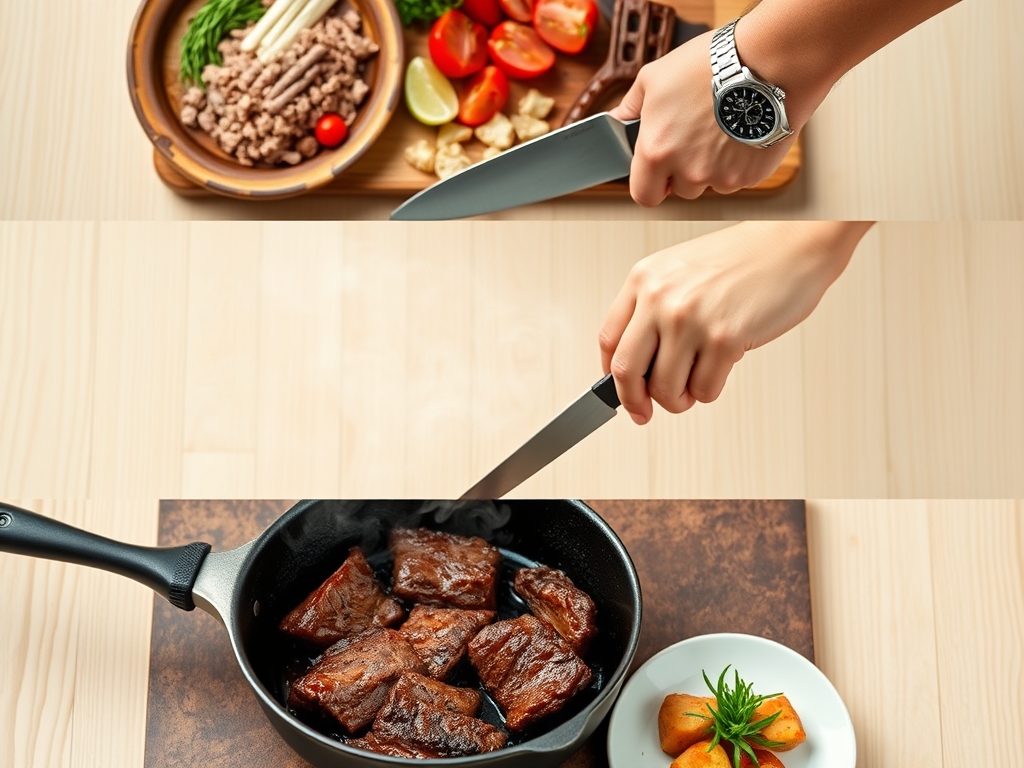
Take your beef out of the refrigerator 20 minutes before it hits the smoke. Use a bench scraper to portion the meat without overworking the proteins. Over-handling leads to a dense, rubbery texture because it over-develops the myosin proteins.
Pro Tip: This phase utilizes the principle of thermal equilibrium. By reducing the temperature gap between the meat and the smoker, you ensure the exterior does not overcook before the center reaches safety.
2. The Surface Preparation
Apply your rub generously from a height of about 12 inches. This ensures an even "snowfall" of seasoning. Use your hands to gently press the spices into the surface, creating a "tack" that helps the smoke particles adhere to the meat.
Pro Tip: This facilitates the Maillard reaction. The sugars and amino acids in the rub react under heat to create hundreds of new flavor compounds, resulting in that signature savory crust.
3. The Smoke Infusion
Place your meat on a wire rack over the smoker grates. Use a heavy-bottomed skillet or a water pan nearby to maintain a humid environment. Humidity is the secret to a deep smoke ring; moist surfaces attract smoke more effectively than dry ones.
Pro Tip: Smoke particles are "sticky." By maintaining a moist environment, you facilitate the absorption of nitrogen dioxide, which reacts with the meat's myoglobin to create the pink smoke ring.
4. The Internal Monitoring
Insert a high-quality probe thermometer into the thickest part of the meat. You are aiming for an internal temperature of 160 degrees Fahrenheit for ground beef. Do not rely on color; smoked meat can remain pink even when fully cooked due to the nitric acid reaction.
Pro Tip: Watch for the "stall." While less dramatic than with a brisket, ground beef can experience a brief plateau in temperature as moisture evaporates from the surface, cooling the meat.
5. The Glaze Application
In the final 15 minutes, use a silicone brush to apply a thin layer of sauce or glaze. This is where you can infuse sweetness or acidity to balance the heavy smoke.
Pro Tip: This is known as "tacking up." The heat evaporates the water in the sauce, concentrating the sugars and creating a sticky, lacquered finish through caramelization.
6. The Carryover Rest
Remove the meat from the smoker using tongs and place it on a warm platter. Tent loosely with foil. Do not wrap it tightly, or you will steam the crust you worked so hard to build.
Pro Tip: Thermal carryover will cause the internal temperature to rise by another 3 to 5 degrees. Resting allows the muscle fibers to relax, ensuring the juice stays in the meat rather than on your cutting board.
The Deep Dive
From a macro perspective, smoked ground beef is a powerhouse of bioavailable protein and essential minerals like zinc and B12. A standard 4-ounce serving contains roughly 25g of protein and 20g of fat. For my Keto friends, this is a "holy grail" meal. For those going Gluten-Free, ensure your rubs and sauces do not contain hidden malt or soy sauce. If you are leaning into a Vegan lifestyle, this smoking technique works surprisingly well with pea-protein based "meat" crumbles; just reduce the smoke time by 30% as they lack the same connective tissue.
The Fix-It:
- The Meat is Dry: You likely used meat that was too lean. Next time, add a tablespoon of cold water or beef broth to the mix to provide extra moisture.
- No Smoke Flavor: You might be using "stale" wood. Ensure your wood chunks are high-quality and producing "blue smoke" rather than thick, white, bitter smoke.
- Crumbly Texture: You didn't "bind" the meat. A quick toss with a teaspoon of kosher salt per pound helps the proteins cross-link, providing a better bite.
Meal Prep Science: To reheat and maintain "day-one" quality, avoid the microwave. The high-frequency waves agitate water molecules too violently, toughening the beef. Instead, use a vacuum sealer or a tightly covered dish in a 300-degree oven with a splash of beef stock to re-introduce moisture through steam.
The Wrap-Up
Smoked ground beef is the ultimate culinary "glow up." It takes an affordable, everyday ingredient and elevates it through the sophisticated application of wood fire and temperature control. By understanding the science of fat rendering and the Maillard reaction, you are not just cooking; you are engineering flavor. So, grab your digital scale, fire up the pellets, and let those hickory notes transform your dinner into something truly legendary. You have the tools, the tech, and the talent; now go get smoking!
The Kitchen Table
How long does it take to smoke ground beef?
Typically, it takes 60 to 90 minutes at 225 degrees Fahrenheit. Always cook to an internal temperature of 160 degrees. Factors like humidity and meat thickness will influence the exact timing, so use a digital probe thermometer for accuracy.
What is the best fat ratio for smoked beef?
An 80/20 fat-to-lean ratio is the gold standard. The fat renders slowly during the smoking process, basting the meat from the inside out. This prevents the beef from becoming dry or "chalky" during the extended exposure to dry heat.
Can I smoke frozen ground beef?
It is not recommended. For the best smoke penetration and food safety, the meat should be fully thawed. Smoking frozen meat leads to uneven cooking and prevents the rub from adhering properly to the surface of the beef.
Why is my smoked ground beef still pink?
This is often a "smoke ring," a chemical reaction between nitrogen dioxide in the smoke and myoglobin in the meat. It does not mean the beef is undercooked. Always rely on a thermometer reading of 160 degrees Fahrenheit rather than color.
What wood is best for ground beef?
Hickory and oak provide a classic, bold BBQ flavor that stands up well to the richness of beef. For a subtler, sweeter profile, try cherry or apple wood. Avoid mesquite unless you want a very intense, pungent smoke flavor.