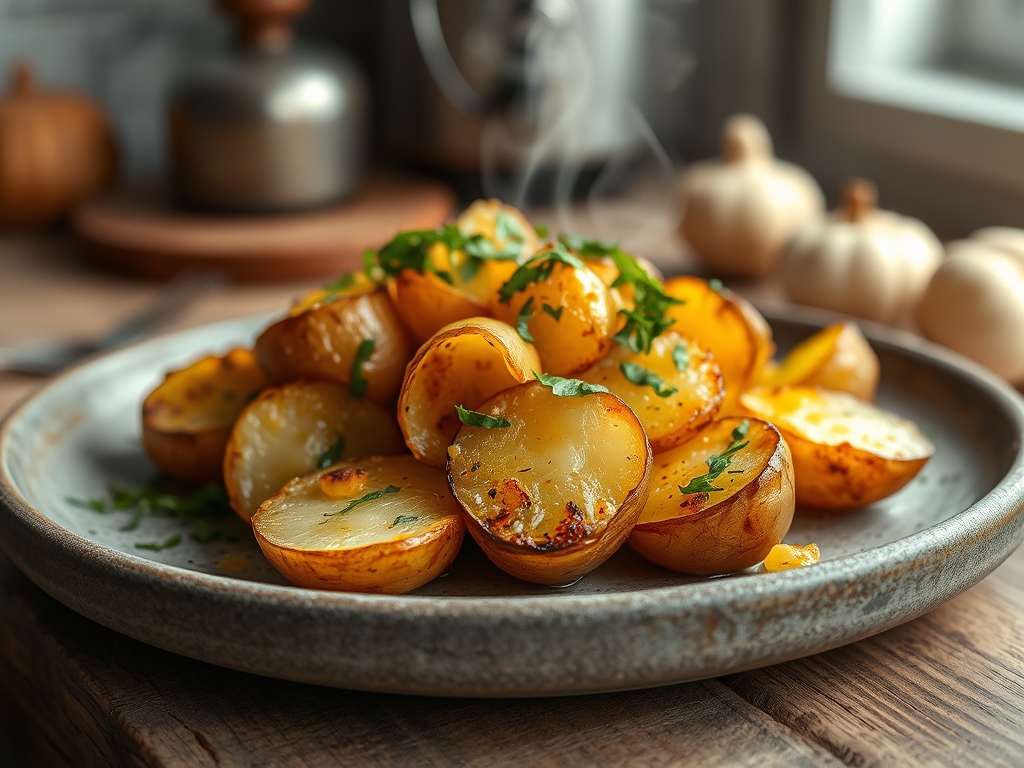
Close your eyes and listen for that specific, rhythmic sizzle of starch hitting hot fat. It is the sound of a perfect crust forming, a golden promise that these garlic butter potato recipes are about to change your Tuesday night forever. There is something primal about the scent of crushed cloves infusing into bubbling butter; it is a fragrant, heavy cloud that clings to your kitchen and signals that comfort is officially served. We are not just making a side dish here. We are engineering a masterpiece of texture where the exterior offers a glass-like shatter while the interior remains as fluffy as a cloud. If you have ever struggled with soggy spuds or burnt garlic, consider this your technical intervention. We are diving deep into the chemistry of the humble tuber to ensure every bite is a high-definition explosion of salt, fat, and aromatics.
The Gathers:
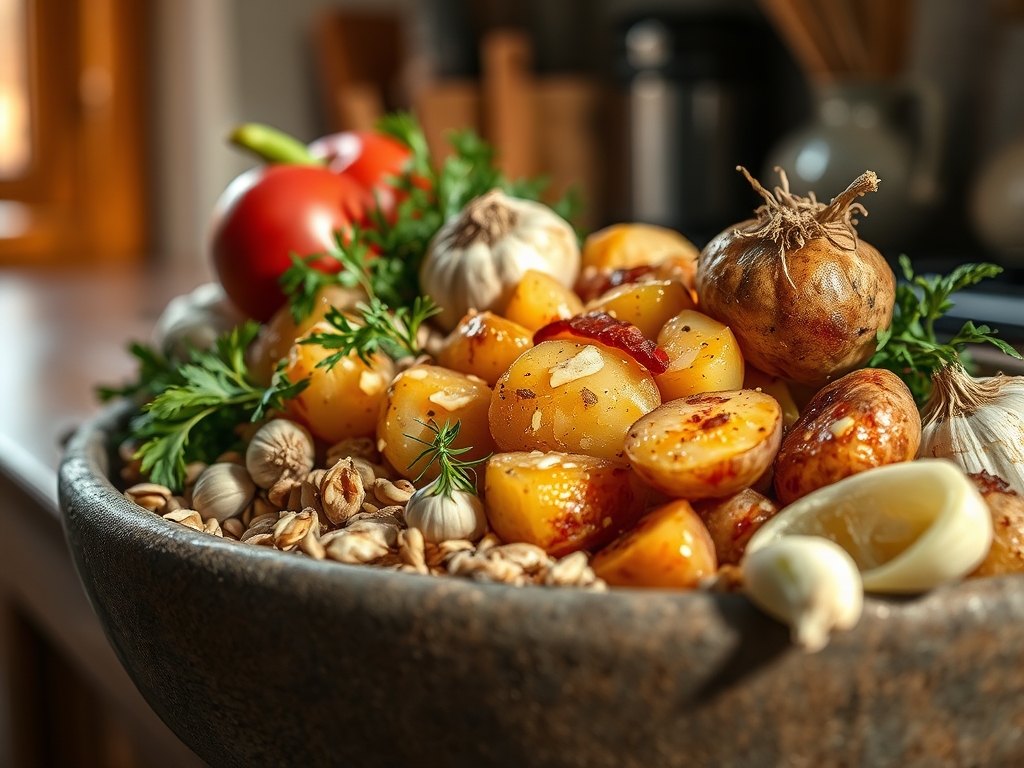
To achieve elite results, your mise-en-place must be precise. Start with Russet or Yukon Gold potatoes; the high starch content in Russets creates the best crunch, while Yukons offer a natural buttery creaminess. You will need high-fat European butter, which has a lower water content than standard grocery brands, ensuring your emulsion does not break. Grab a whole head of garlic; we are looking for firm, heavy bulbs without green sprouts, which indicate bitterness. Fresh rosemary and thyme provide the woodsy backbone, while a finishing salt like Maldon adds that essential tactile crunch.
For your Smart Substitutions, if you are avoiding dairy, a high-quality avocado oil paired with nutritional yeast can mimic the savory depth of butter. If you lack fresh herbs, a pinch of dried tarragon offers a sophisticated, piquant lift. Use a digital scale to weigh your potatoes; consistency in size is the secret to uniform cooking.
The Clock
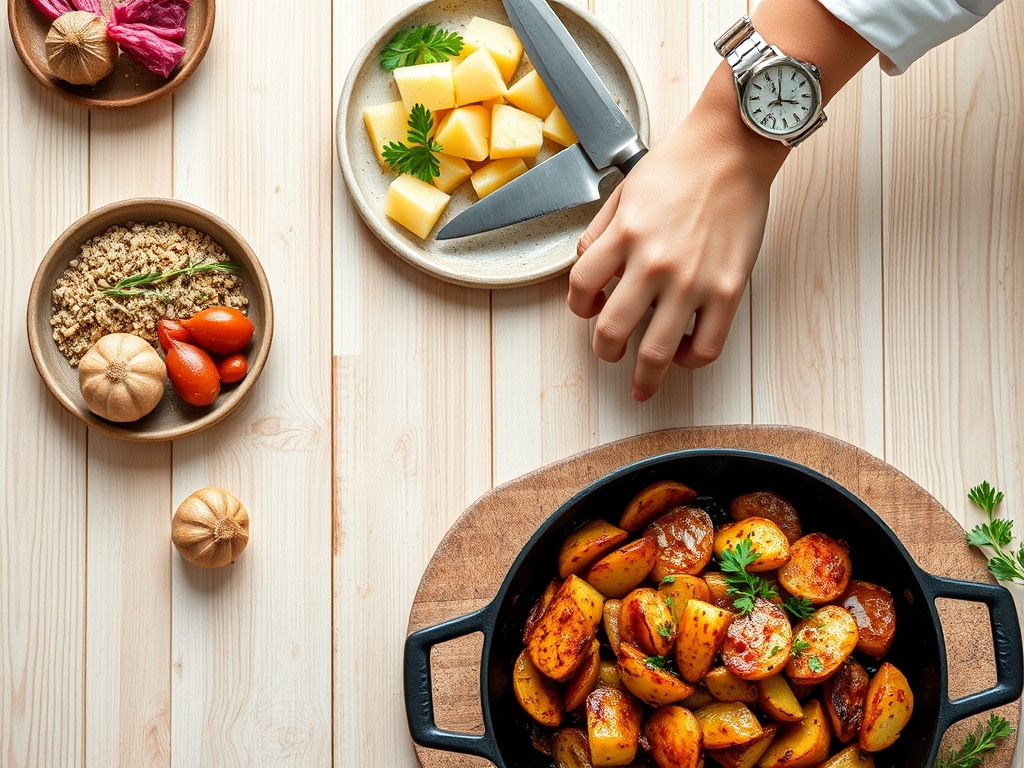
The "Chef's Flow" is all about overlapping tasks to maximize efficiency. Total active prep time is approximately 15 minutes, while the total cook time spans 40 to 50 minutes depending on your heat source. You should be peeling and dicing while your water reaches a rolling boil. While the potatoes undergo their first par-boil, use that window to mince your garlic with a microplane and chop your herbs. This ensures that by the time the potatoes are ready for the heavy-bottomed skillet, your aromatics are prepped and your workspace is clear. Never rush the cooling phase after boiling; steam is the enemy of a crisp crust.
The Masterclass:
1. The Alkaline Par-Boil
Start by boiling your potato chunks in water heavily seasoned with salt and a half-teaspoon of baking soda. The alkaline environment breaks down the exterior pectin, creating a starchy slurry on the surface of the potato.
Pro Tip: This slurry increases surface area, which leads to a more dramatic Maillard reaction once the potatoes hit the hot fat.
2. The Rough-Up
After draining, return the potatoes to the pot and shake them vigorously. You want the edges to look frayed and mashed. Use a bench scraper to move them onto a drying rack.
Pro Tip: Surface moisture inhibits browning. By letting them air-dry for five minutes, you ensure the heat goes toward crisping rather than evaporating water.
3. The Fat Render
Heat your skillet and add a combination of oil and butter. The oil raises the smoke point, preventing the milk solids in the butter from burning too quickly while still providing that rich flavor.
Pro Tip: Using a saucier or heavy pan ensures even heat distribution, preventing "hot spots" that lead to unevenly cooked batches.
4. The Sizzle Phase
Place the potatoes in a single layer. Do not crowd the pan. Let them sit undisturbed for at least five minutes to allow the crust to set.
Pro Tip: This relies on thermal conduction; moving them too early tears the delicate starchy crust before it has fully dehydrated and hardened.
5. The Garlic Infusion
Only add your minced garlic in the final three minutes of cooking. Garlic has a high sugar content and low water content, meaning it burns almost instantly at high temperatures.
Pro Tip: To prevent acrid flavors, toss the garlic in the residual fat at the edge of the pan where the temperature is slightly lower.
6. The Herb Deglaze
Toss in your fresh herbs right at the end. The heat will cause the volatile oils in the rosemary and thyme to release, coating the potatoes in a fragrant film.
Pro Tip: This is a form of fat-soluble flavor extraction, where the butter acts as a carrier for the herb aromatics.
7. The Acid Hit
A tiny squeeze of lemon juice or a teaspoon of white wine vinegar right before serving cuts through the heavy lipids.
Pro Tip: Acid balances the pH of the dish, brightening the flavor profile and making the savory notes "pop" on the palate.
8. The Resting Period
Transfer the potatoes to a warm bowl. Let them sit for two minutes before the final toss.
Pro Tip: This allows for thermal carryover, ensuring the very center of the potato reaches peak fluffiness without overcooking the exterior.
9. The Salt Finish
Use a flaky sea salt as the final touch. The large crystals do not dissolve immediately, providing a textural contrast.
Pro Tip: Salt is a flavor enhancer that suppresses bitterness and highlights the natural sweetness of the caramelized garlic.
10. The Aeration Toss
Use tongs to give the potatoes one final, high-energy toss to ensure every nook and cranny is coated in the viscous garlic butter.
Pro Tip: Aerating the potatoes slightly as you toss helps cool the surface just enough to lock in the crunch.
The Deep Dive
From a nutritional standpoint, a serving of these potatoes provides complex carbohydrates, potassium, and vitamin C. While the butter adds saturated fat, you can optimize the profile by using grass-fed butter, which is higher in Omega-3 fatty acids. For Dietary Swaps, Keto followers can apply these same garlic butter techniques to roasted cauliflower florets. For a Vegan version, use a high-quality vegan butter block that contains coconut oil for a similar saturated fat "mouthfeel."
The Fix-It: Common Pitfalls
- Soggy Potatoes: Usually caused by overcrowding the pan. Fix this by cooking in two batches to allow steam to escape.
- Burnt Garlic: If your garlic turns black, it will be bitter. Fix this by adding a splash of water or stock to the pan to instantly drop the temperature and stop the cooking.
- Potatoes Sticking: This happens if the pan wasn't hot enough before adding the fat. Use a metal spatula to gently pry them up once the crust has fully formed.
Meal Prep & Reheating
To maintain "day-one" quality, never reheat these in a microwave. The microwave agitates water molecules, turning your crispy crust into mush. Instead, use an air fryer at 375 degrees for four minutes or a dry skillet over medium heat. This re-activates the fats and recrisps the exterior.
The Wrap-Up
Mastering garlic butter potato recipes is about more than just following a list; it is about understanding the relationship between starch, heat, and timing. When you see that deep mahogany color and smell the toasted garlic, you will know you have transitioned from a home cook to a culinary scientist. These potatoes are the ultimate crowd-pleaser, the side dish that steals the spotlight from the main course. Now, grab your skillet and get to work; your kitchen is waiting for that golden glow.
The Kitchen Table
Which potato is best for garlic butter recipes?
Russets are best for a crunchy exterior due to their high starch content. Yukon Golds are a close second if you prefer a creamier, waxier texture that holds its shape well during high-heat roasting or frying.
How do I stop my garlic from burning?
Always add minced garlic during the last three minutes of cooking. Since garlic has very little moisture and high sugar, it browns rapidly. Adding it late allows the flavor to infuse without the cloves turning bitter and black.
Can I make these ahead of time?
Yes. You can par-boil and rough up the potatoes up to 24 hours in advance. Store them uncovered in the fridge; the cold air actually helps dehydrate the surface, leading to an even crispier result when you finally fry them.
Why add baking soda to the boiling water?
Baking soda raises the pH of the water, which breaks down the potato's pectin. This creates a starchy paste on the surface that dehydrates and crisps up intensely when it hits the hot butter and oil in the pan.