
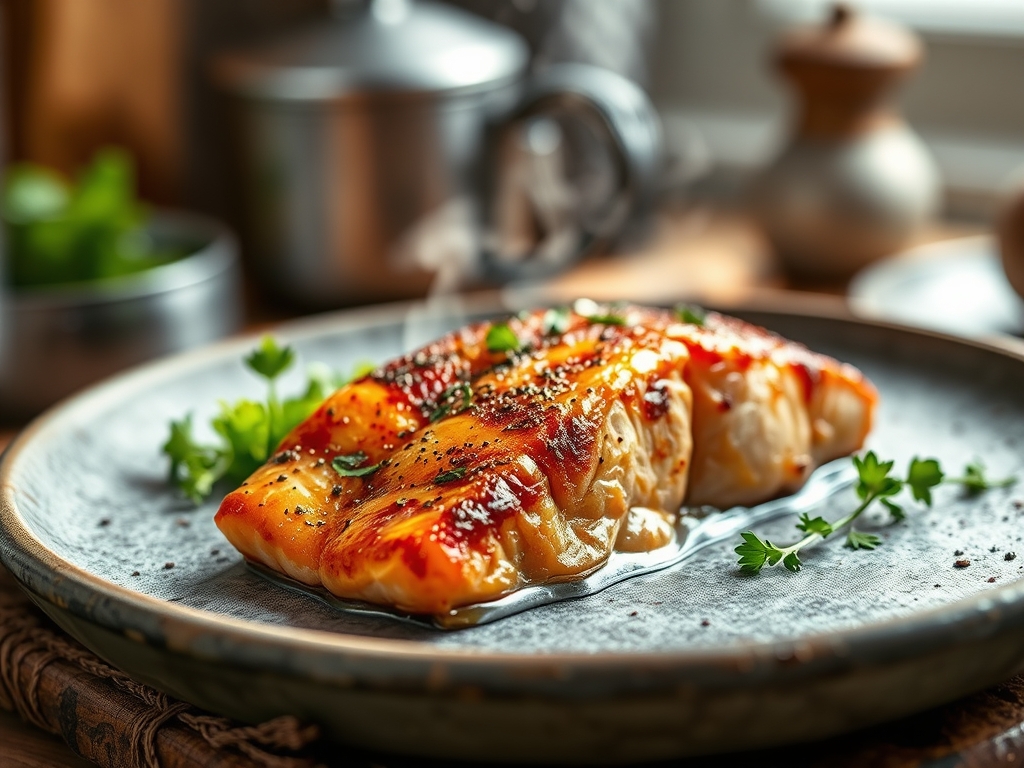
The scent of toasted sesame oil hitting a hot sheet pan is a sensory siren call that transforms a Tuesday night into a high-end bistro experience. When you are hunting for the ultimate asian salmon recipes oven techniques, you are looking for that perfect intersection of flaky, fatty protein and the sharp, fermented depth of soy and ginger. Imagine the salmon skin crackling under the broiler while the flesh remains butter-soft; this is the result of precise thermal control and osmotic pressure. We are moving beyond basic seasoning into a world where chemistry creates the crust. By mastering the balance of salinity and acidity, you can elevate a simple fillet into a masterpiece of umami.
The Gathers:
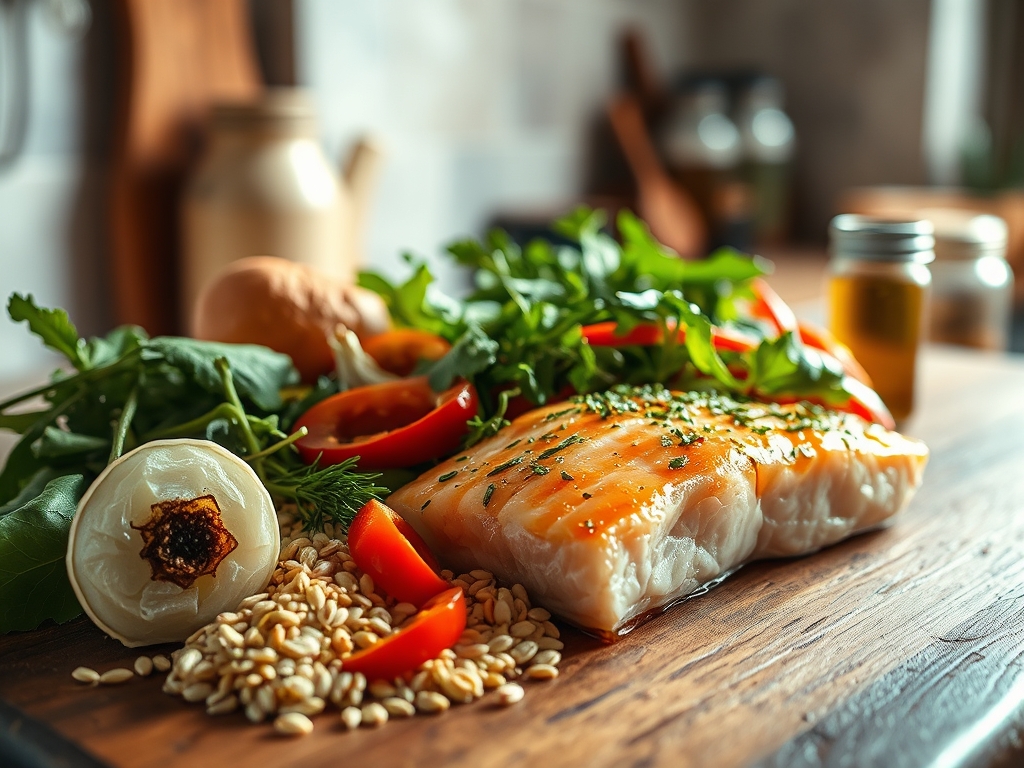
Setting up your station is about more than organization; it is about managing the volatile aromatics that define these nine variations. Start with high-quality Atlantic or King salmon, ensuring it is at room temperature to prevent thermal shock. You will need your microplane for the ginger and garlic to maximize surface area, allowing the essential oils to infuse the marinade instantly.
Your pantry staples should include liquid aminos or tamari for that foundational salt, toasted sesame oil for its low smoke point and nutty profile, and honey or maple syrup to facilitate the Maillard reaction. For the piquant kick, gather gochujang, sriracha, or dried chili flakes. If you find yourself missing an ingredient, use these smart substitutions: swap rice vinegar for apple cider vinegar to maintain acidity, or use miso paste instead of salt to add a fermented, viscous body to your glaze. Always keep a digital scale nearby to ensure your ratios of fat to acid are precise; consistency is the hallmark of a professional kitchen.
The Clock
Efficiency in the kitchen relies on what professionals call the Chef's Flow. For these asian salmon recipes oven methods, your total active time is a mere 10 minutes, with a cook time ranging from 12 to 15 minutes depending on the thickness of the cut. The "flow" involves prepping your aromatics while the oven preheats to a steady 400 degrees Fahrenheit. If you are using a glaze, you will apply it in two stages: once before the bake and once during the final three minutes under the broiler. This staggered approach prevents the sugars from scorching while ensuring a thick, lacquer-like finish.
The Masterclass
1. The Desiccation Phase
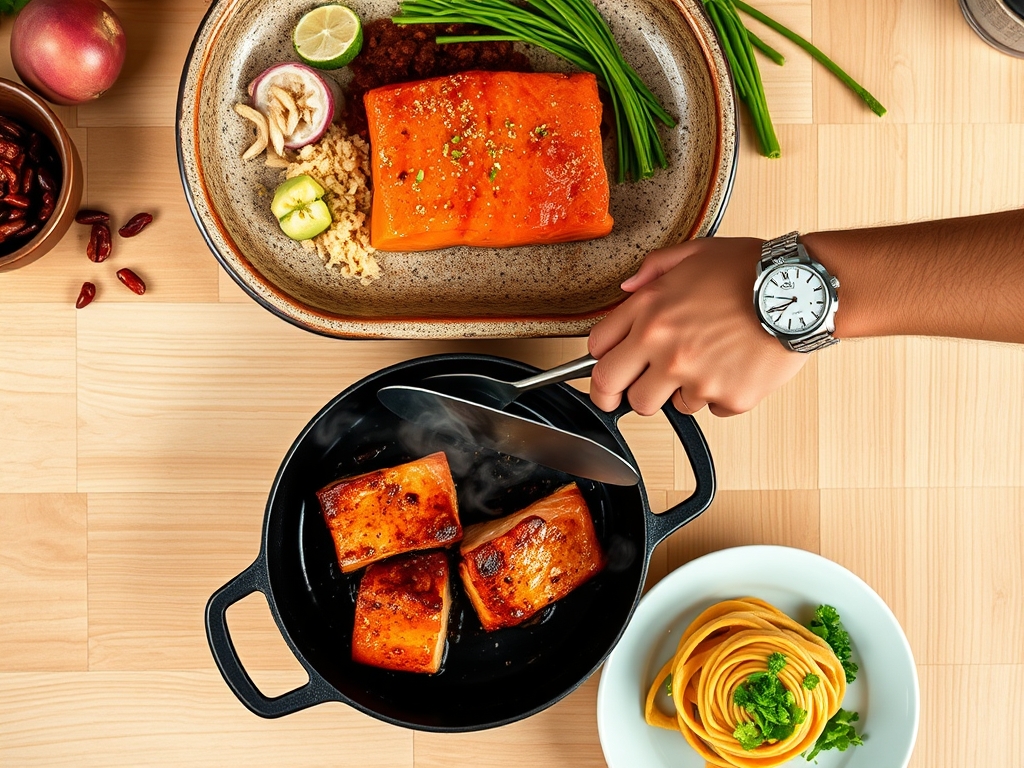
Pat the salmon skin dry with a lint-free paper towel until it feels like parchment. Moisture is the enemy of texture; if the surface is wet, the fish will steam rather than sear. Use a bench scraper to move your fillets onto a parchment-lined tray without tearing the delicate flesh.
Pro Tip: This process utilizes evaporation to concentrate flavors. By removing surface water, you allow the heat to immediately begin the Maillard reaction, creating a savory crust instead of a soggy exterior.
2. The Emulsified Glaze
In a small saucier, whisk together your soy, ginger, and honey. Use a rapid, circular motion to create a temporary emulsion. This ensures the fat from the sesame oil is evenly distributed, preventing it from separating and pooling on the pan.
Pro Tip: Emulsification increases the viscosity of your sauce. A thicker glaze clings to the protein fibers, ensuring every bite is saturated with flavor rather than sliding off onto the baking sheet.
3. The Thermal Application
Place the tray on the center rack. Avoid the bottom rack, as the direct heat can cause the albumin (the white protein) to push out too quickly, leaving the fish dry. We want a gentle, even climb in internal temperature.
Pro Tip: Slow heat prevents the rapid contraction of muscle fibers. This keeps the internal juices trapped within the protein matrix, resulting in a "melt-in-your-mouth" texture.
4. The Broiler Finish
Switch your oven to the broiler setting for the final 120 seconds. Watch the glaze closely as it begins to bubble and darken. This is where the complex sugars undergo caramelization, adding a bitter-sweet depth that cuts through the fatty fish.
Pro Tip: This stage relies on infrared radiation. The intense top-down heat creates a localized high-temperature zone that crisps the edges without overcooking the center of the fillet.
5. The Carryover Rest
Remove the salmon when it is five degrees below your target temperature. Use tongs to gently transfer the fillets to a cooling rack or warm plate. Tent loosely with foil, but do not seal it, or the trapped steam will soften your hard-earned crust.
Pro Tip: Thermal carryover continues to cook the fish even after it leaves the oven. Resting allows the muscle fibers to relax and reabsorb juices, ensuring the moisture stays in the fish when you finally flake it with a fork.
The Deep Dive
From a nutritional standpoint, salmon is a powerhouse of Omega-3 fatty acids and high-quality protein. A standard 6-ounce portion provides roughly 34 grams of protein and 18 grams of healthy fats. If you are following a Keto lifestyle, simply swap the honey for an erythritol-based sweetener or monk fruit. For a Vegan alternative, this exact roasting method works beautifully with thick slabs of firm tofu or "steaks" of cauliflower; just increase the roasting time to ensure the centers are tender.
Even the best chefs face hurdles. If your salmon looks "chalky," you have likely overcooked it; the fix is to flake the fish and toss it with extra glaze to reintroduce moisture. If the skin is rubbery, your oven temp was too low; next time, start with a preheated heavy-bottomed skillet on the stovetop before transferring to the oven. If the glaze is too salty, a squeeze of fresh lime juice will provide the necessary acid to reset the palate.
When it comes to meal prep, the secret to "day-one" quality is the reheat. Avoid the microwave, which turns the fats rancid and the texture rubbery. Instead, place the salmon in a 300-degree oven for 8 minutes with a splash of water in the pan. The steam will gently rehydrate the protein without further denaturing the fibers.
The Wrap-Up
Mastering asian salmon recipes oven styles is about more than just following a list of ingredients; it is about understanding how heat interacts with sugar, salt, and fat. By utilizing tools like the microplane and digital scale, and respecting the science of thermal carryover, you transform a simple dinner into a culinary event. Go ahead and get creative with your aromatics; the kitchen is your laboratory, and the results are delicious.
The Kitchen Table
How do I prevent the white stuff from appearing on salmon?
That white substance is albumin. To minimize it, avoid overcooking and try brining the salmon in a basic salt solution for ten minutes before baking. This relaxes the muscle fibers so they do not squeeze the protein out during the heating process.
What is the best temperature for oven-baked Asian salmon?
For most asian salmon recipes oven methods, 400 degrees Fahrenheit is the sweet spot. It is hot enough to caramelize the sugars in soy-based glazes while cooking the interior quickly enough to retain moisture and a buttery texture.
Can I bake frozen salmon with this method?
It is best to thaw salmon first for even cooking. If you must cook from frozen, lower the temperature to 350 degrees and double the cook time. However, the texture will be significantly firmer and less succulent than thawed fillets.
How do I know when the salmon is perfectly done?
The salmon is done when it reaches an internal temperature of 125 to 130 degrees Fahrenheit for medium-rare. The flesh should be opaque and flake easily when pressed with a fork, but still look slightly translucent in the very center.