
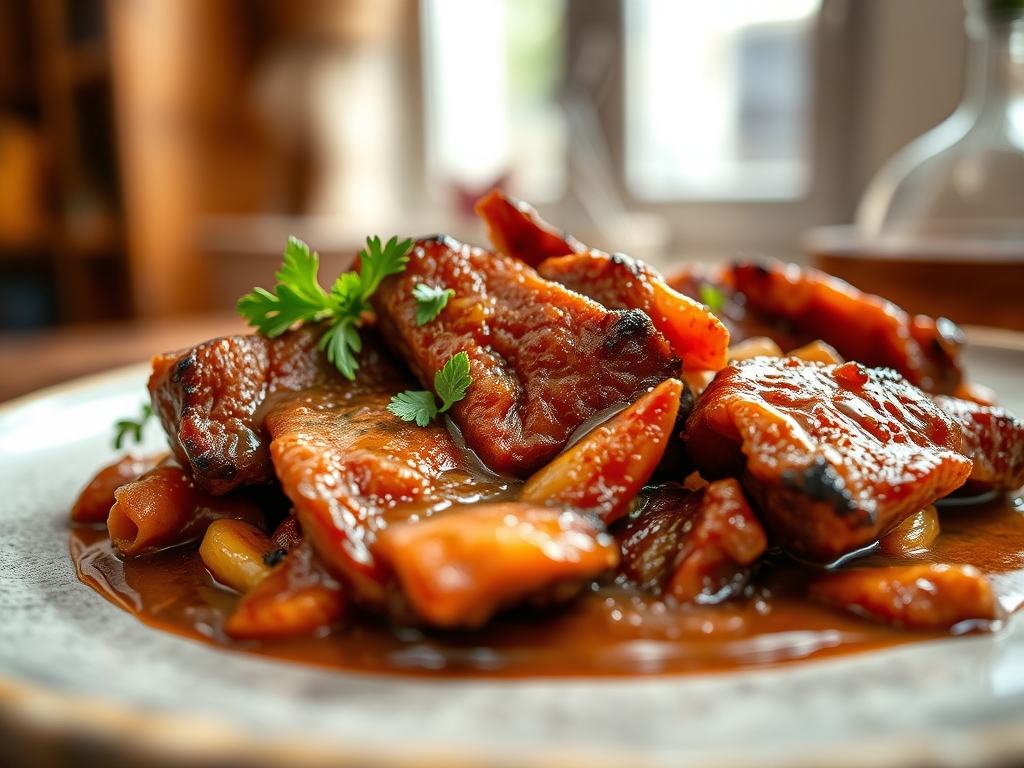
Imagine the sound of a heavy bottomed skillet meeting a high flame; it is the opening chord of a culinary symphony. When you search for delicious beef recipes, you are not just looking for sustenance; you are hunting for that perfect intersection of chemical transformation and primal satisfaction. It is about the way a cold marble of fat renders into a viscous, golden nectar that coats every fiber of the protein.
We are diving deep into seven masterpieces that redefine what a home cook can achieve. From the slow, enzymatic breakdown of a chuck roast to the high heat sear of a prime ribeye, the secret lies in understanding the molecular dance happening beneath the surface. Grab your favorite apron and a glass of something bold. We are about to turn your kitchen into a high end steakhouse where the science is just as satisfying as the first bite.
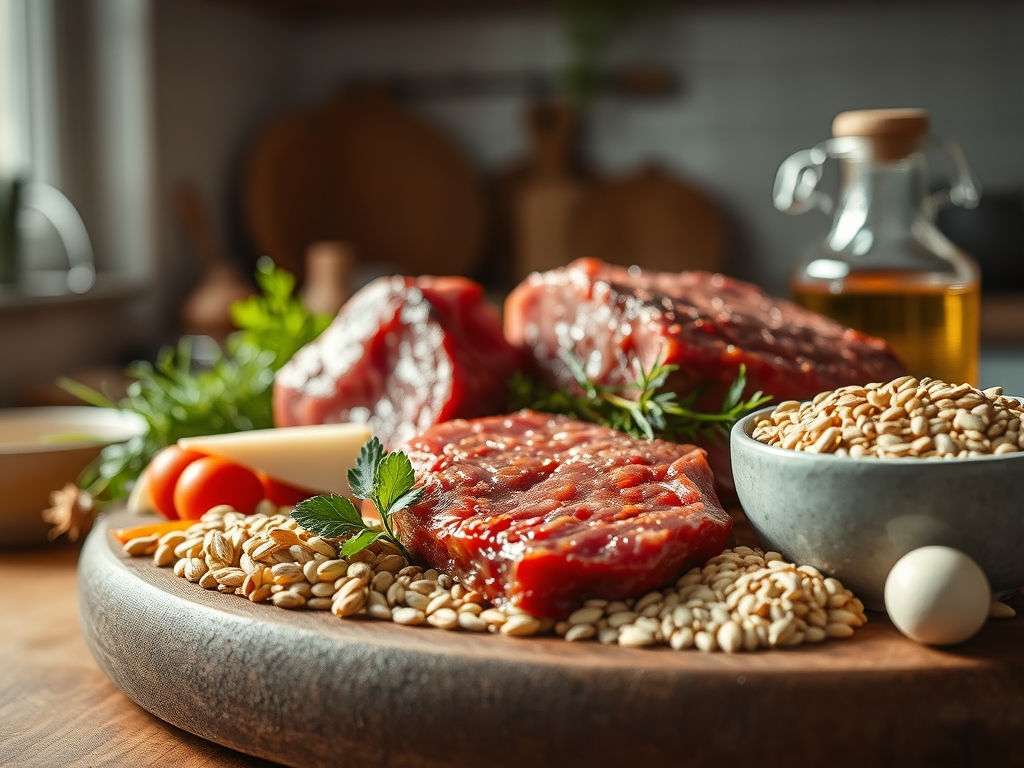
The Gathers:
Before the heat even touches the pan, we must respect the mise en place. High quality beef is a complex matrix of water, protein, and lipids. To achieve the best results, you need a digital scale to ensure your dry brines are precise. Salt is not just a seasoning; it is a denaturant that unwinds protein strands, allowing them to trap moisture. You will also need a microplane for zesting aromatics and a saucier for those piquant reductions that elevate a simple steak to a masterpiece.
Smart Substitutions:
If you cannot find a traditional picanha, a well trimmed top sirloin cap offers a similar fat to lean ratio. For those avoiding alcohol, replace red wine deglazing liquids with a mixture of beef bone broth and a splash of pomegranate juice. The acidity mimics the tannic structure of wine without the ethanol. If you lack a heavy cast iron pan, a tri ply stainless steel skillet is your next best bet for heat retention and even distribution.
The Clock
Efficiency in the kitchen is about mastering the Chef's Flow. This is the art of overlapping tasks so that no second is wasted. While your beef is tempering on the counter, you are prepping the aromatics. While the meat rests after cooking, you are whisking your pan sauce.
Expect a total active prep time of 45 minutes across these recipes, with cook times ranging from a lightning fast 8 minute sear for skirt steak to a 4 hour slow braise for short ribs. Always factor in a mandatory 10 to 15 minute resting period. This allows the internal pressure to stabilize and the juices to redistribute, ensuring that the moisture stays in the meat rather than flooding your cutting board.
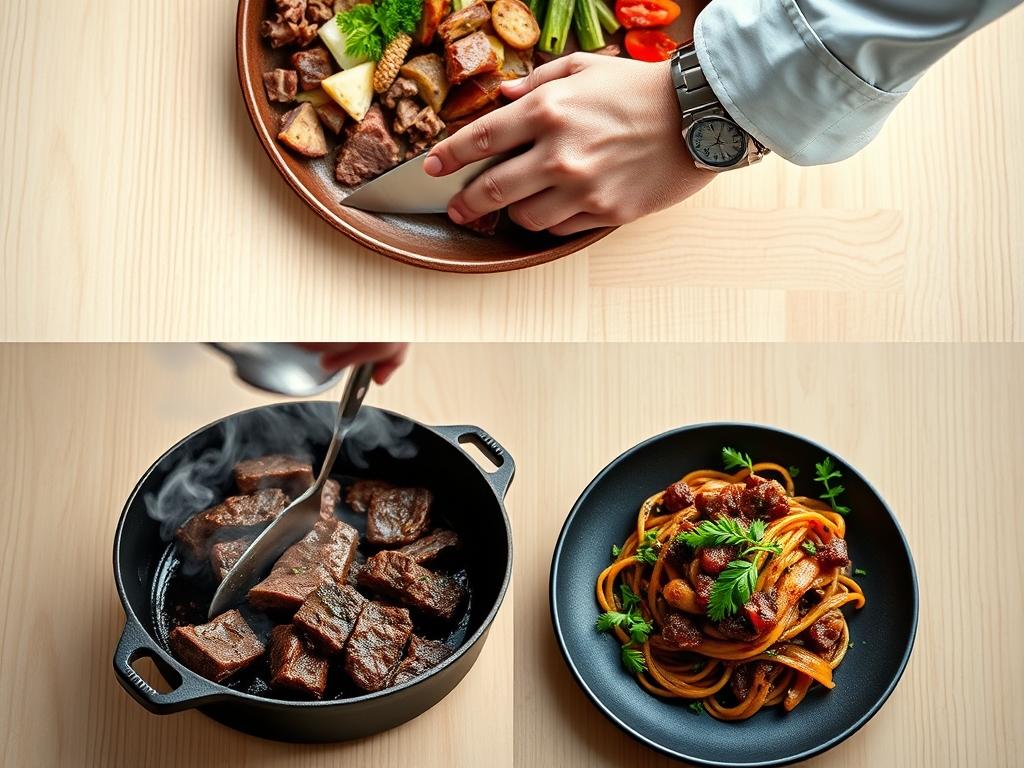
The Masterclass
1. The Dry Brine Protocol
Start by patting your beef bone dry with paper towels. Use your digital scale to measure out 1.5 percent of the meat's weight in kosher salt. Dust the meat evenly on all sides and place it on a wire rack over a sheet pan in the fridge for at least four hours.
Pro Tip: This process facilitates osmosis. Initially, salt draws moisture out; however, after several hours, that salty brine is reabsorbed into the muscle fibers, seasoning the interior and breaking down tough proteins for a more tender bite.
2. The High Heat Sear
Heat your heavy bottomed skillet until a drop of water beads up and dances on the surface. Add a high smoke point oil like avocado or grapeseed oil. Use tongs to carefully lay the beef away from you to avoid splashes. Do not move the meat for at least three minutes.
Pro Tip: This is the Maillard Reaction in action. It is a chemical reaction between amino acids and reducing sugars that creates hundreds of different flavor compounds. If the meat sticks, the crust hasn't fully formed yet; patience is a literal flavor builder.
3. The Deglaze and Infuse
Once the beef is removed, you will see brown bits stuck to the pan. This is called the fond. Pour in your liquid of choice and use a bench scraper or wooden spoon to loosen those bits. Add cold butter and whisk vigorously to create an emulsion.
Pro Tip: This creates a viscous sauce through a process called mounting with butter (monter au beurre). The milk solids and fats in the butter suspend in the liquid, creating a velvety texture that clings to the beef.
4. The Reverse Sear Method
For thicker cuts like a Tomahawk or thick filet, start them in a low oven (225 degrees Fahrenheit) until the internal temperature reaches 115 degrees. Only then do you move them to the screaming hot skillet for the final crust.
Pro Tip: This minimizes the gray band of overcooked meat. By bringing the temperature up slowly, you ensure the interior is edge to edge pink while the exterior gets a focused, intense blast of heat for the crust.
5. The Rest and Carryover
Transfer your beef to a warm plate and tent loosely with foil. Do not wrap it tightly, or you will steam the crust you worked so hard to build. Let it sit for at least 10 minutes.
Pro Tip: Thermal carryover means the internal temperature will continue to rise by 5 to 10 degrees after the meat is removed from the heat. Pulling the meat early prevents overcooking during this crucial phase.
6. The Slice Against the Grain
Identify the direction of the muscle fibers. Use a sharp carving knife to slice perpendicular to these lines. This shortens the fibers, making the beef much easier to chew.
Pro Tip: This is a matter of mechanical tenderness. By cutting the long, elastic fibers into short segments, you are doing the work for your teeth, making even tougher cuts feel like butter.
7. The Final Aeration
Just before serving, spoon your warm pan sauce over the slices and finish with a sprinkle of flaky sea salt and fresh herbs.
Pro Tip: Adding salt at the end provides a piquant pop of flavor and texture. The large crystals do not dissolve immediately, giving you a focused burst of seasoning that contrasts with the rich, savory meat.
The Deep Dive
From a nutritional standpoint, beef is a powerhouse of bioavailable iron, B12, and zinc. A standard 6 ounce serving provides roughly 42 grams of protein. If you are following a Keto lifestyle, focus on fattier cuts like ribeye or brisket. For a Vegan swap, king oyster mushrooms or seitan can be treated with the same searing and deglazing techniques to mimic the savory depth of beef.
The Fix-It:
- Gray Meat: If your beef looks boiled rather than seared, your pan wasn't hot enough or you crowded it. Cook in batches next time.
- Tough Texture: You likely cut with the grain. Rotate your cutting board 90 degrees and try again.
- Broken Sauce: If your pan sauce looks greasy, it broke. Add a teaspoon of water and whisk violently over low heat to re emulsify.
Meal Prep: To reheat beef without it turning into rubber, use the "Low and Slow" method. Place it in a covered dish with a tablespoon of water or broth at 250 degrees until just warm. This prevents the proteins from tightening up and squeezing out all the moisture.
The Wrap-Up
Mastering delicious beef recipes is a journey through chemistry and heat management. When you understand why we salt early or why we deglaze a pan, you move from being a recipe follower to a culinary artist. These seven techniques provide a foundation for a lifetime of incredible meals. Remember, the best tool in your kitchen isn't your expensive knife; it is your curiosity and your willingness to let the science do the heavy lifting.
The Kitchen Table
How do I get a restaurant quality crust at home?
Ensure the beef surface is bone dry and use a heavy cast iron skillet. High heat is essential to trigger the Maillard reaction quickly without overcooking the center of the meat.
Why is my steak always tough?
You are likely skipping the resting phase or slicing with the grain. Resting allows fibers to relax, while slicing against the grain mechanically breaks down the muscle structure for easier chewing.
What is the best oil for searing beef?
Use oils with a high smoke point like avocado, grapeseed, or clarified butter. Avoid extra virgin olive oil or unrefined coconut oil, as they burn and turn bitter at high searing temperatures.
Can I cook beef straight from the freezer?
It is possible but not ideal for thick cuts. For the best results, thaw completely in the refrigerator to ensure even heat penetration and to prevent a frozen center with a burnt exterior.