
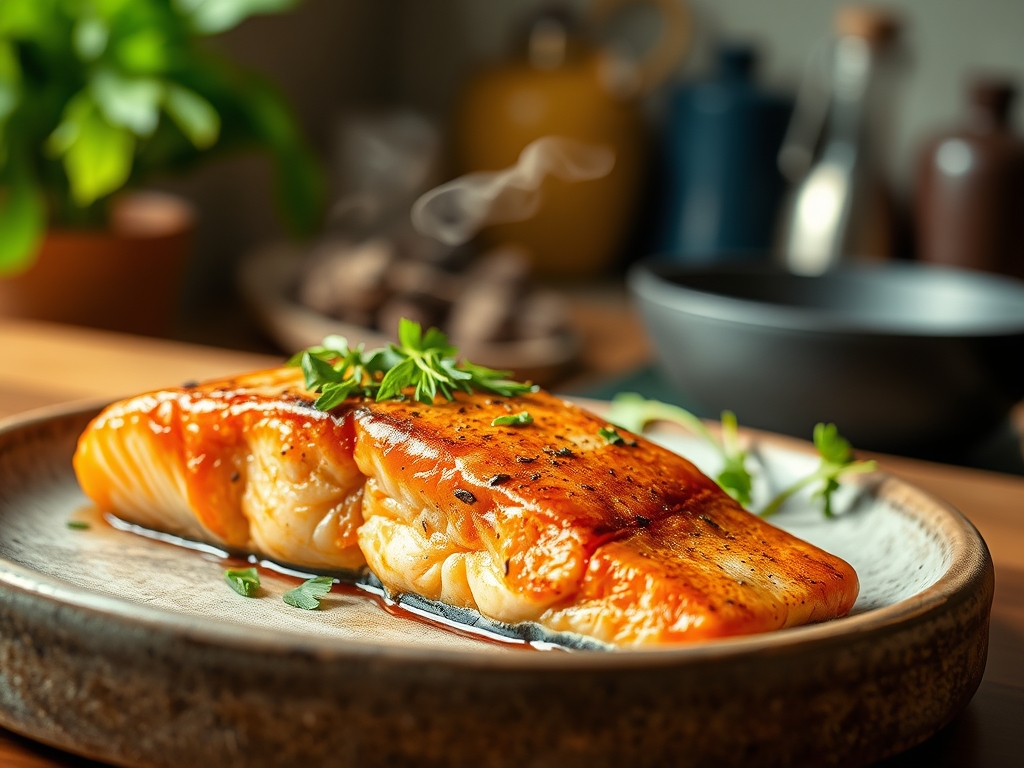
Imagine the sound of cold, marble-toned protein meeting the searing surface of a heavy-bottomed skillet. That sharp hiss is not just noise; it is the symphony of amino acids and reducing sugars colliding to create a crust so gold it rivals a sunset. When you master star salmon recipes, you are not just making dinner. You are conducting a masterclass in texture and temperature. Salmon is the ultimate culinary canvas because it carries fat like a dream and accepts heat with a delicate, flaking grace. We have all been there; staring at a grey, overcooked plank of fish that feels more like a chore than a luxury. But today, we are pivoting. We are leaning into the science of the sear and the magic of the glaze. We are transforming your kitchen into a high-end bistro where the lighting is dim, the wine is crisp, and the fish is the undisputed lead. Get ready to elevate your weeknight rotation with techniques that professional stylists use to make every plate look like a high-fashion editorial.
The Gathers:
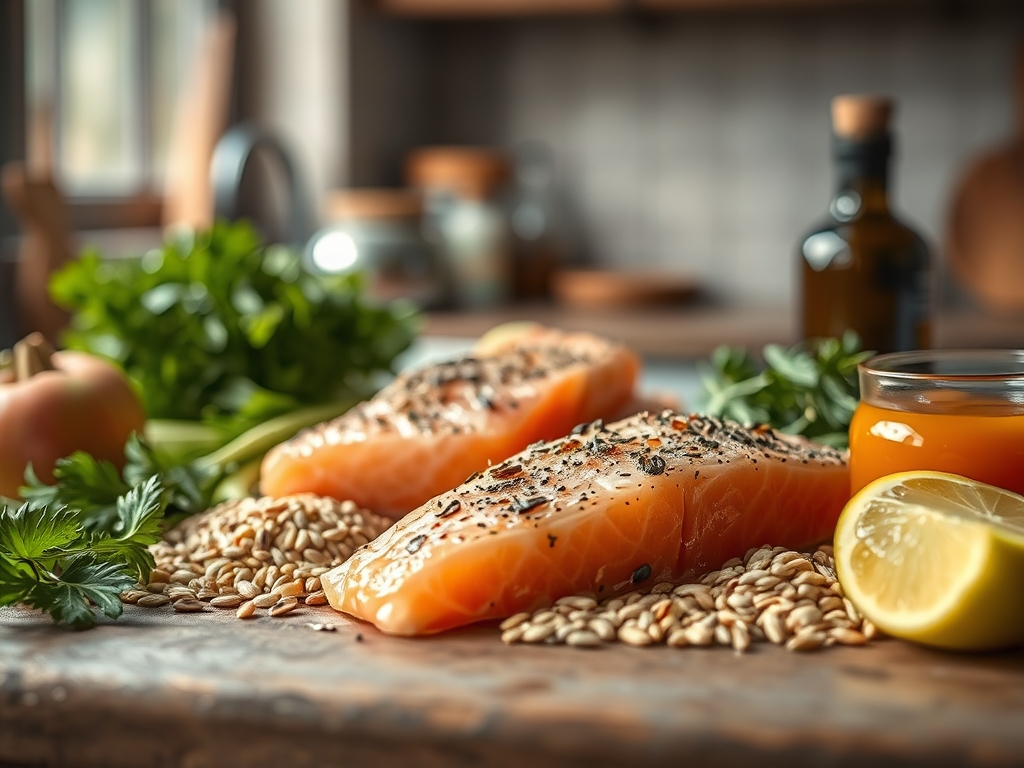
To execute world-class star salmon recipes, your mise-en-place must be precise. Start with center-cut Atlantic or King salmon fillets. Look for vibrant, saturated hues and firm flesh that bounces back when pressed. You will need a high-smoke-point fat like avocado oil or clarified butter to facilitate the Maillard reaction without scorching. For the aromatics, gather fresh sprigs of thyme, smashed garlic cloves, and a lemon that feels heavy for its size; this indicates a high juice-to-pith ratio.
Your toolkit is just as vital as your ingredients. Reach for a flexible fish spatula to navigate the delicate underside of the fillet and a digital scale to ensure uniform portioning. A microplane is essential for harvesting the zest without the bitter white pith. If you are looking for smart substitutions, swap honey for agave nectar to achieve a more viscous glaze, or use coconut aminos instead of soy sauce for a lower-sodium, gluten-free profile. If fresh herbs are unavailable, use a high-quality dry rub, but remember that dried herbs are more concentrated; use a one-to-three ratio to avoid overpowering the natural sweetness of the fish.
The Clock
Efficiency in the kitchen is all about "Chef's Flow." This is the psychological state where your movements are rhythmic and your timing is instinctive. For these star salmon recipes, expect a total commitment of 25 minutes. Prep takes exactly 10 minutes; this includes patting the fish bone-dry to prevent steaming and pre-heating your skillet. The cook time is a tight 10 to 12 minutes, depending on the thickness of the cut.
The final 5 minutes are the most critical: the rest. During this phase, the internal juices redistribute from the center to the edges, ensuring every bite is succulent. If you skip the rest, the moisture will evacuate the moment your fork hits the flesh. By syncing your side dishes; perhaps a quick-blanched asparagus or a 15-minute quinoa; you ensure that everything hits the table at the peak of its thermal perfection.
The Masterclass
1. The Desiccation Ritual
Begin by using a paper towel to remove every trace of surface moisture from the skin. Moisture is the enemy of a crisp exterior. If the surface is damp, the heat of the pan will be wasted evaporating water rather than browning the protein.
Pro Tip: This is the science of surface tension. By removing water, you allow the oil to make direct contact with the skin, accelerating the Maillard reaction for a shattering crunch.
2. The Cold-Pan Start or High-Heat Sear
For ultra-crisp skin, place the salmon skin-side down in a cold, heavy-bottomed skillet and then turn the heat to medium-high. This allows the fat beneath the skin to render out slowly, essentially frying the skin in its own lipids.
Pro Tip: Rendering is a slow thermal process. A cold start prevents the protein fibers from tightening too quickly, which often causes the fish to curl or "bow" upward.
3. The Weight Technique
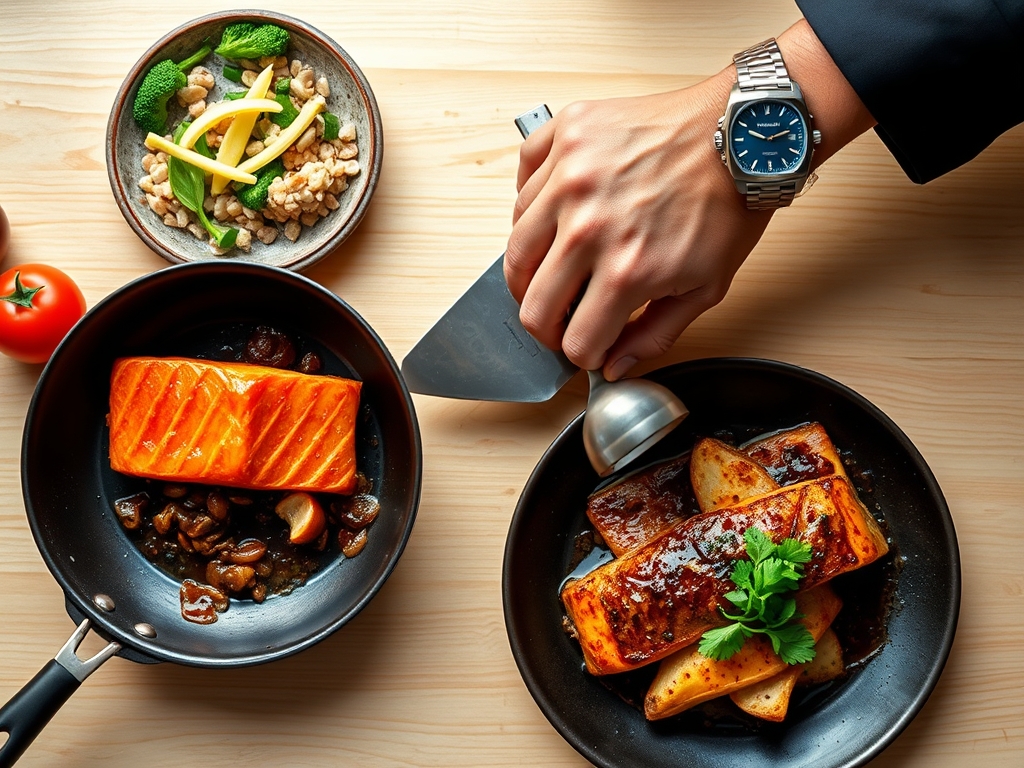
As the fish begins to cook, use your flexible fish spatula to press down firmly on the fillet for the first 30 seconds. This ensures the entire surface area of the skin maintains contact with the heat source.
Pro Tip: This prevents the contraction of collagen fibers. When collagen heats up, it shrinks; by applying pressure, you force the skin to stay flat and brown evenly.
4. The Butter Baste
Once you flip the fish, drop a knob of cold butter, smashed garlic, and thyme into the pan. Use a saucier spoon to repeatedly drench the salmon in the bubbling, infused fat.
Pro Tip: This is known as "arrosage." The hot butter acts as a finishing agent that cooks the top layers gently while infusing the meat with fat-soluble flavor compounds from the aromatics.
5. The Carryover Calculation
Remove the salmon from the pan when it is about 5 degrees below your target temperature. For a perfect medium-rare, pull it at 125 degrees Fahrenheit.
Pro Tip: Thermal carryover is a real physical phenomenon. The residual heat on the surface continues to travel toward the center even after the fish is removed from the flame.
The Deep Dive
When we look at the macro nutrition of star salmon recipes, we are talking about a powerhouse of Omega-3 fatty acids and high-quality protein. A standard 6-ounce portion delivers roughly 34 grams of protein and a significant dose of Vitamin B12. For those following a Keto lifestyle, this is a "gold-star" meal due to the healthy fat content. If you are cooking for a vegan guest, you can apply these same searing techniques to a thick-cut "steak" of cauliflower or a marinated block of extra-firm tofu, though the fat-rendering science will differ.
Even the pros run into trouble. If your salmon is "leaking" white stuff, that is albumin. It is a protein that pushes to the surface when the fish is cooked too fast or too high. The fix? Lower your heat. If the skin is sticking, you likely tried to flip it too early. The fish will naturally "release" from the pan once the crust has fully formed. For meal prep, never reheat salmon in the microwave; it turns the fats rancid and the texture rubbery. Instead, let it come to room temperature or gently warm it in a covered pan with a splash of water to create a steam-room effect.
The Wrap-Up
Mastering star salmon recipes is about more than just following a list of steps; it is about understanding the physics of your kitchen. From the way you use your tongs to the moment you decide to deglaze the pan, every choice matters. You now have the technical vocabulary and the scientific backing to turn a simple piece of seafood into a culinary event. Go forth, sear with confidence, and remember that the best ingredient you can add to any dish is a little bit of swagger and a lot of heat.
The Kitchen Table
How do I prevent salmon from sticking to the pan?
Ensure the pan and oil are shimmering hot before adding the fish. Pat the salmon completely dry with paper towels. Once placed, do not move the fillet until a golden crust forms; the fish will naturally release when ready.
What is the white stuff on cooked salmon?
That is albumin, a liquid protein that solidifies when heated. While safe to eat, it usually indicates the fish was cooked too quickly at a high temperature. Minimize it by using lower heat and avoiding overcooking.
Can I use frozen salmon for these recipes?
Yes, but thaw it completely in the refrigerator overnight. Once thawed, treat it like fresh fish by removing all excess moisture. Frozen salmon often retains more water, so extra drying is essential for a good sear.
How do I know when salmon is perfectly done?
The most reliable method is using a digital thermometer to reach 130 to 135 degrees Fahrenheit for medium. Alternatively, press the top gently; the flesh should begin to flake along the natural white lines of fat.