
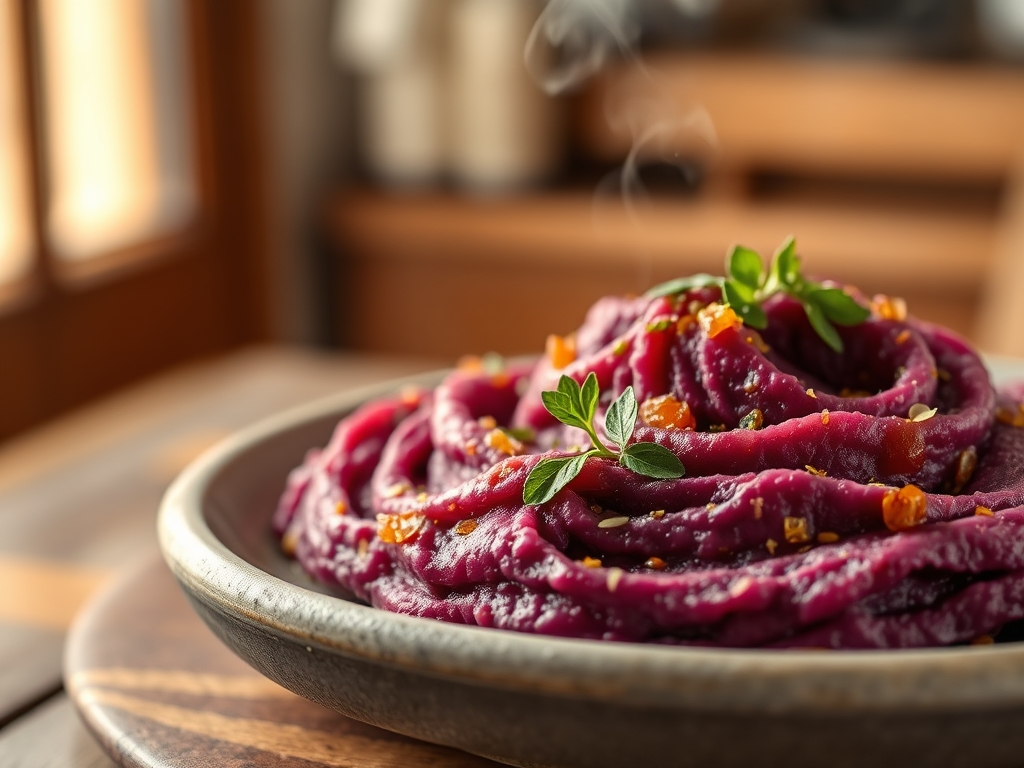
Imagine a bowl of velvet so deep in color it looks like it was plucked from a royal velvet tapestry. We are not just talking about a side dish; we are talking about a culinary revolution that happens right on your dinner plate. When you dive into the world of mashed purple sweet potato recipes, you are balancing the line between high-end molecular gastronomy and the ultimate comfort food. The aroma is distinct; it is earthier than its orange cousin, carrying notes of roasted chestnuts and a subtle floral finish that lingers on the palate.
This vibrant hue comes from anthocyanins, the same powerful antioxidants found in blueberries. These compounds do more than just look pretty; they provide a dense, starchy structure that creates a mouthfeel far more luxurious than standard russet potatoes. Whether you are hosting a festive holiday gala or just want to elevate a Tuesday night protein, mastering this dish is your new secret weapon. We are going to treat these tubers with the respect they deserve, using precise thermal control and fat emulsification to turn a humble root into a masterpiece of texture and taste. Grab your apron; it is time to get scientific with our starch.
The Gathers:
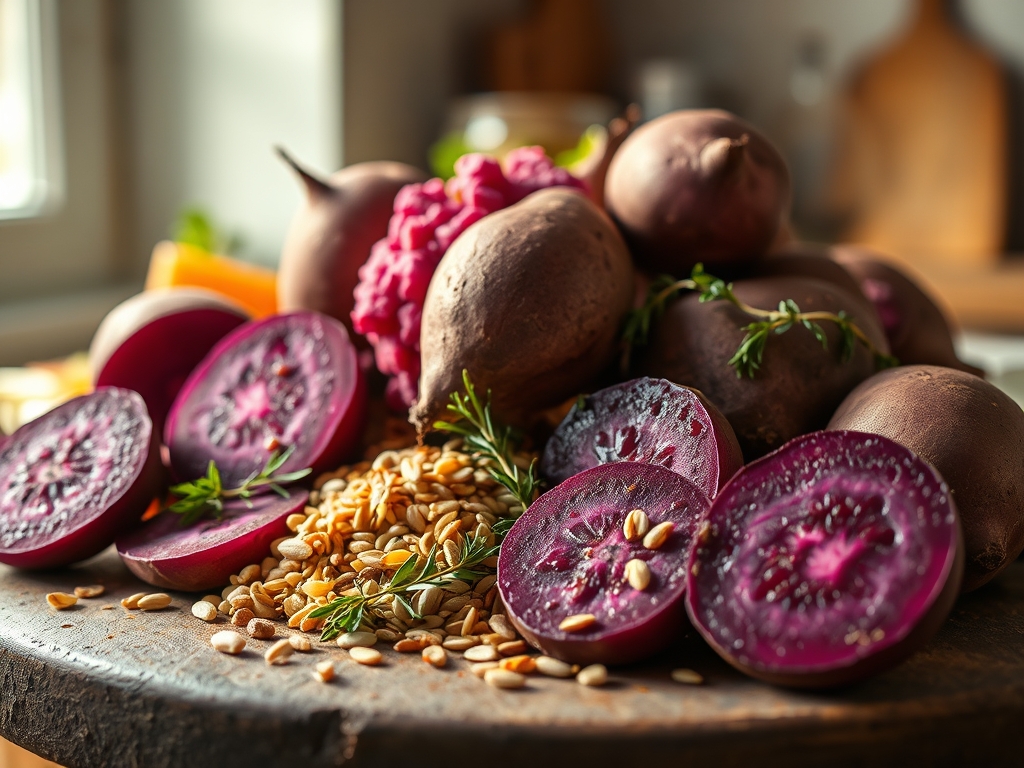
To achieve the perfect consistency, your mise-en-place must be exact. Start with two pounds of Stokes or Okinawan purple sweet potatoes. You will notice their skin is tougher and their flesh is significantly more viscous than traditional yams. You will also need four ounces of high-fat European butter (look for 82 percent butterfat) and half a cup of heavy cream or full-fat coconut milk for a vegan alternative.
For the aromatics, gather fresh thyme, a single star anise to pull out the natural sweetness, and high-quality Maldon sea salt. Use a digital scale to measure your ingredients; precision is the difference between a puree and a paste. If you want to add a bright note, keep a microplane handy to zest a bit of lime or ginger at the very end.
Smart Substitutions: If you cannot find heavy cream, a dollop of Greek yogurt adds a piquant tang and boosts the protein content. For a dairy-free version, use brown butter flavored with toasted sage to mimic the nutty depth that purple potatoes naturally crave.
The Clock: 15 Minutes Prep, 25 Minutes Cook
The "Chef's Flow" is all about overlapping tasks to ensure no heat is lost. Your total active time is minimal if you work with the physics of the potato. While your water comes to a boil in a heavy-bottomed skillet or pot, you should be peeling and dicing. The goal is to have the potatoes hit the water the second it reaches a rolling boil to prevent enzymatic browning, which can dull that brilliant violet color.
While the potatoes simmer, use a small saucier to warm your cream and butter together. Never add cold dairy to hot starch; it shocks the molecules and results in a gummy texture. By the time the potatoes are fork-tender, your infused liquid is ready for immediate incorporation.
The Masterclass:
1. The Precision Dice
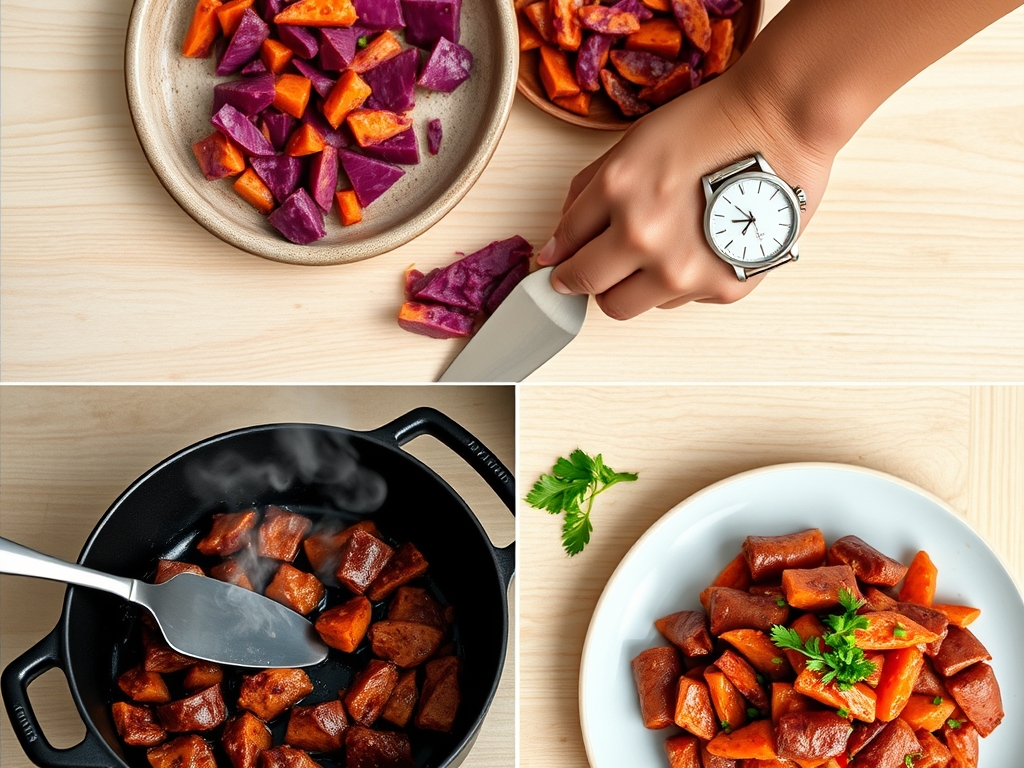
Peel your potatoes and use a sharp chef's knife to create uniform one-inch cubes. Uniformity is not just for aesthetics; it ensures every piece reaches the same internal temperature simultaneously, preventing a mix of mushy and hard centers.
Pro Tip: This prevents thermal lag. If pieces vary in size, the smaller ones overcook and absorb excess water, which dilutes the flavor and ruins the starch-to-fat ratio.
2. The Controlled Simmer
Place the cubes in cold salted water and bring to a boil. This allows the heat to penetrate the dense cellular walls of the purple potato gradually. Cook until they are easily pierced by a paring knife but not falling apart.
Pro Tip: This method manages starch gelatinization. Starting in cold water prevents the outside from becoming gluey before the inside is even warm.
3. The Steam Release
Drain the potatoes in a colander and then return them to the hot pot for sixty seconds. Shake them gently over low heat. You will see steam rising rapidly; this is moisture leaving the potato.
Pro Tip: This is called dehydrating the crumb. Removing excess water creates "room" within the potato cells to soak up the butter and cream you are about to add.
4. The Aeration Phase
Pass the hot potatoes through a ricer or a food mill. Avoid using a blender or food processor at all costs. High-speed blades tear the starch granules, releasing amylose and turning your beautiful mash into a sticky, wallpaper-paste consistency.
Pro Tip: Using a ricer allows you to aerate the mash. Incorporating air between the particles creates that sought-after "cloud-like" fluffiness.
5. The Emulsification
Slowly fold in your warm cream and butter mixture using a silicone spatula or a bench scraper. Use a folding motion rather than stirring. This incorporates the fats gently into the starch matrix.
Pro Tip: This creates a stable emulsion. The fats coat the starch molecules, providing a silky mouthfeel that lingers without feeling greasy.
6. The Flavor Infusion
This is where you add your salt, pepper, and any finely grated aromatics from your microplane. Taste as you go. Purple potatoes are less sweet than orange ones, so they can handle a bit more salt or even a splash of maple syrup to balance the earthiness.
Pro Tip: Salt acts as a flavor bridge. It suppresses the natural bitterness of the skin pigments and enhances the perception of sweetness.
7. The Final Polish
Before serving, give the mash one last vigorous whisk with a balloon whisk to ensure total homogeneity. Transfer to a warmed serving bowl to maintain the temperature.
Pro Tip: This accounts for carryover cooking. The residual heat will continue to soften the fibers for several minutes after you finish mixing.
The Deep Dive:
When we look at the macro nutrition of mashed purple sweet potato recipes, we see a powerhouse. They are higher in fiber and lower on the glycemic index than white potatoes, meaning you get sustained energy without the sugar crash. One cup provides roughly 140 calories, 4 grams of fiber, and a massive dose of Vitamin A.
Dietary Swaps:
For Vegan diners, substitute butter with an avocado oil-based spread and use cashew cream for richness. For Keto enthusiasts, you can blend the purple potato with steamed cauliflower (50/50 ratio) to lower the net carbs while keeping the color. All versions are naturally Gluten-Free.
The Fix-It:
- Too Runny: If you added too much liquid, do not panic. Stir in a tablespoon of potato starch or simmer the mash over very low heat in a wide pan to evaporate moisture.
- Too Lumpy: If you missed the ricer step, use a hand masher vigorously while the potatoes are still screaming hot. Cold potatoes will never lose their lumps.
- Dull Color: If the purple looks grey, add a teaspoon of lemon juice. The acidity shifts the pH and brightens the anthocyanins back to a vivid violet.
Meal Prep:
To reheat and maintain "day-one" quality, use a double boiler. Microwaving can create "hot spots" that toughen the starch. If you must microwave, add a splash of milk and cover tightly to trap the steam.
The Wrap-Up:
You have now graduated from basic boiling to the high art of the purple mash. By understanding the chemistry of starch and the importance of thermal management, you have turned a simple root vegetable into a culinary statement piece. Remember; the key is to treat the potato with a gentle hand and a hot ricer. Now go forth, grab your tongs and your digital scale, and paint your dinner plate with the most delicious shade of purple imaginable.
The Kitchen Table:
Can I make these ahead of time?
Yes. Store them in an airtight container for up to three days. Reheat slowly with an extra splash of cream to restore the original viscous texture and moisture levels.
Why are my purple potatoes dry?
Purple varieties have lower moisture content than white potatoes. If they feel dry, increase your butter or cream ratio slightly to achieve a smoother, more luxurious emulsion.
Do I need to peel them?
While the skins contain nutrients, peeling is essential for a smooth mash. The skins are quite fibrous and will interfere with the silky mouthfeel of the final dish.
What goes best with purple sweet potatoes?
Their earthy flavor pairs beautifully with salty proteins like roasted pork, seared scallops, or grilled halloumi. The color contrast makes any protein pop on the plate.
Can I freeze mashed purple sweet potatoes?
Absolutely. The high starch content helps them freeze well. Thaw in the refrigerator overnight and whisk thoroughly while reheating to reintegrate the fats and starches.