
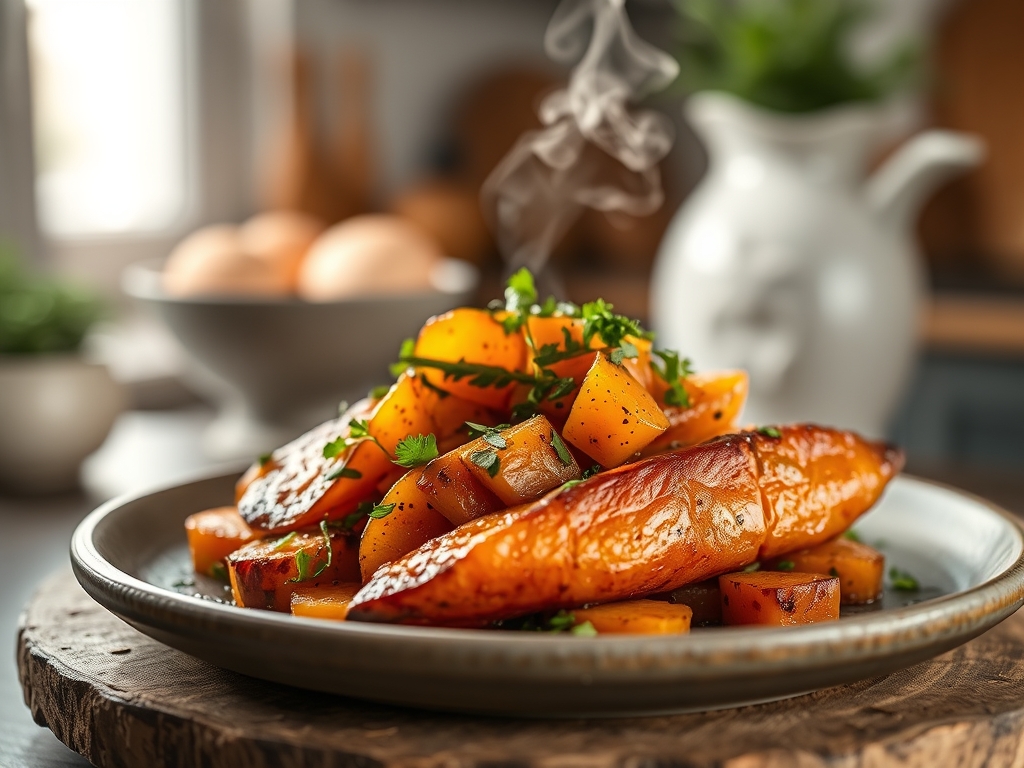
Imagine the scent of caramelized sugars wafting through your kitchen as a humble tuber transforms into a culinary masterpiece. Finding delicious sweet potato recipes for weight loss is not just about cutting calories; it is about harnessing complex carbohydrates and fiber to keep your metabolism humming while satisfying your deepest cravings for comfort food.
The magic lies in the chemistry of the orange flesh. When you apply heat, the amylase enzymes break down starches into maltose, creating a natural sweetness that requires zero refined sugar. We are moving beyond the marshmallow topped casseroles of the past. Instead, we are focusing on high volume, nutrient dense preparations that utilize the sweet potato as a structural base for protein and healthy fats. Whether you are spiralizing them into "noodles" or roasting them into crispy wedges, these tubers are your best ally for sustainable fat loss.
The Gathers:
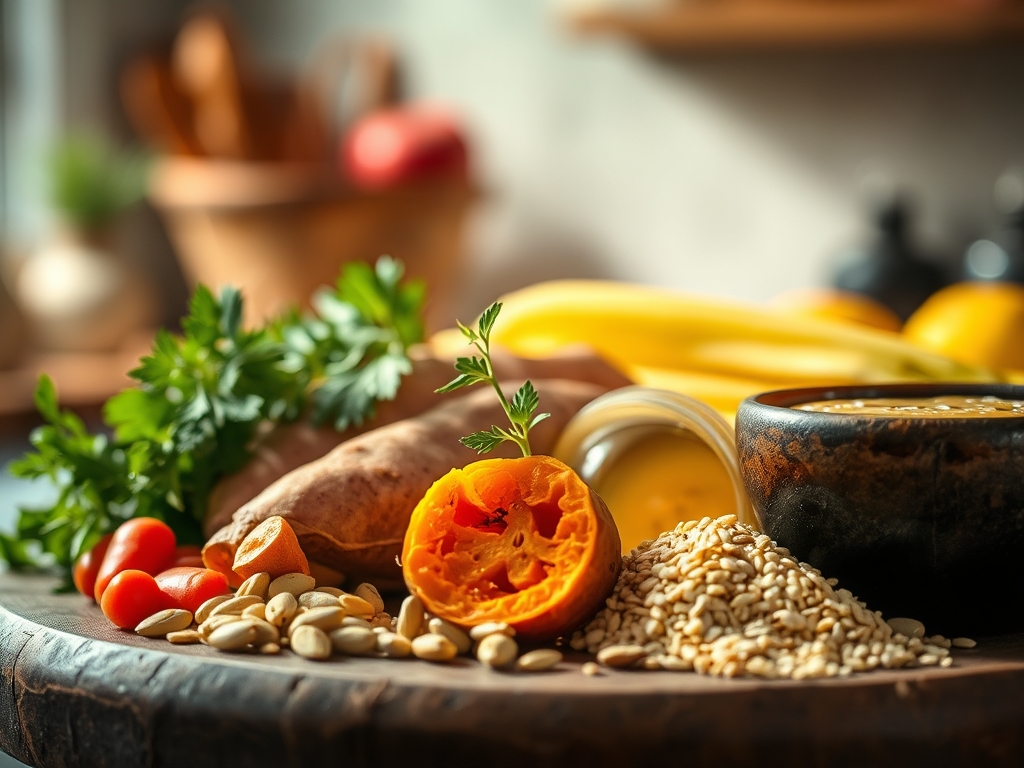
To execute these sweet potato recipes for weight loss with precision, your mise-en-place must be impeccable. Start with firm, jewel-toned Garnet or Beauregard potatoes. These varieties possess a high moisture content that yields a viscous, velvety texture when pureed or roasted. You will also need high-quality aromatics: fresh ginger, garlic, and shallots to provide a piquant counterpoint to the tuber's earthiness.
For your fats, reach for avocado oil or ghee. These have high smoke points, ensuring you can achieve a perfect Maillard reaction without the oil breaking down into acrid compounds. Essential tools include a sharp chef's knife for uniform cubing; a digital scale for precise portioning; and a microplane to zest citrus or grate ginger directly into your marinades.
Smart Substitutions: If you are watching your glycemic load even further, swap half of the sweet potato volume with cauliflower florets. The cauliflower acts as a neutral sponge, absorbing the flavors of your spices while significantly lowering the calorie density of the dish. For a creamy element without the dairy, use full-fat coconut milk or a dollop of Greek yogurt to provide an acidic lift.
The Clock
Efficiency in the kitchen is about mastering the Chef's Flow. Most of these recipes require a 10 minute active prep window followed by 25 to 35 minutes of passive cooking time. To optimize your workflow, always preheat your oven and your heavy-bottomed skillet before you start peeling.
By the time your knife work is finished, your cooking surfaces will have reached thermal equilibrium. This prevents the potatoes from sticking and ensures an immediate sear. If you are meal prepping for the week, roasting three pounds of tubers simultaneously is the ultimate time-saver. You can transform them into different dishes throughout the week: a breakfast hash on Monday, a spicy soup on Wednesday, and a stuffed "jacket" potato on Friday.
The Masterclass
1. The Precision Roast
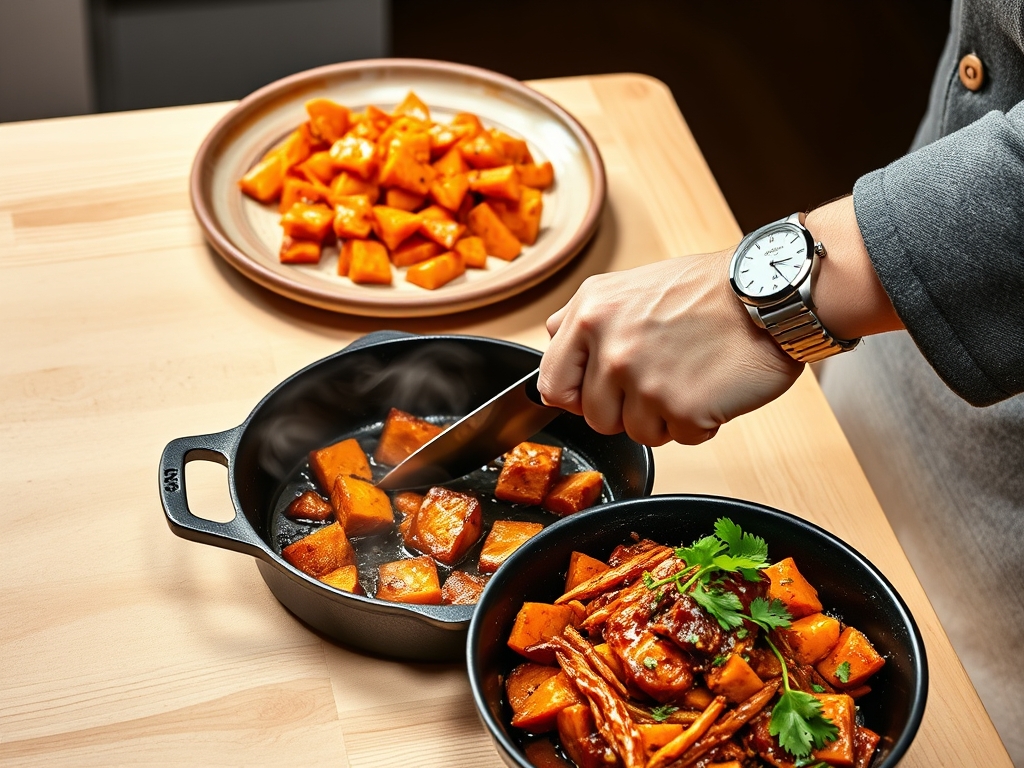
Begin by dicing your potatoes into uniform half-inch cubes. Use your bench scraper to transfer them to a large bowl. Toss with a teaspoon of oil and your dry spices. Spread them onto a parchment-lined sheet pan, ensuring they do not touch. Crowding the pan creates steam, which leads to mushy textures rather than crisp edges.
Pro Tip: This technique relies on evaporative cooling. By leaving space between the cubes, you allow moisture to escape rapidly, which lets the surface temperature rise high enough to trigger caramelization.
2. The Velvety Puree
Steam peeled chunks until they are fork-tender. Transfer them to a high-speed blender or use an immersion blender in a saucier. Add a splash of vegetable stock and a pinch of nutmeg. Blend on high until the mixture is completely smooth and aerated.
Pro Tip: Blending at high speeds incorporates air, creating a colloidal suspension that feels richer on the tongue than it actually is. This allows you to skip the heavy cream while maintaining a luxurious mouthfeel.
3. The Spiralized Sauté
Use a spiralizer to create long, noodle-like strands. Heat a skillet and add a small amount of water or stock to "steam-fry" the strands for three minutes. Finish with a quick toss in pesto or a light peanut sauce using tongs to keep the strands intact.
Pro Tip: This method prevents enzymatic browning by cooking the starch quickly. The short exposure to heat keeps the cell walls of the potato firm, providing an "al dente" texture similar to pasta.
4. The Stuffed Power Boat
Bake the potato whole at 400 degrees Fahrenheit until the skin is crisp and the interior is soft. Slit the top and fluff the inside with a fork. Stuff with black beans, kale, and a squeeze of lime.
Pro Tip: Baking the potato in its skin utilizes conductive heating to steam the interior in its own juices. This preserves the water-soluble vitamins that are often lost during boiling.
5. The Sweet Potato Toast
Slice the potato lengthwise into quarter-inch planks. Place them directly into a toaster or under the broiler until the edges are charred and the center is tender. Top with smashed avocado and a poached egg.
Pro Tip: This utilizes radiant heat to quickly gelatinize the starches on the surface, creating a structural "crust" that can support heavy toppings without collapsing.
6. The Breakfast Power Hash
Sauté finely diced sweet potatoes with bell peppers and onions in a heavy-bottomed skillet. Allow the potatoes to sit undisturbed for four minutes to develop a crust before flipping.
Pro Tip: This promotes the Maillard reaction, a chemical reaction between amino acids and reducing sugars that gives browned food its distinctive, savory flavor profile.
7. The Spicy Tuber Soup
Sauté aromatics, add cubed potatoes and broth, and simmer until soft. Use an immersion blender to partially blend the soup, leaving some chunks for texture. Deglaze the pan with a splash of apple cider vinegar at the end to brighten the flavors.
Pro Tip: Adding an acid like vinegar at the end of the cooking process balances the viscous nature of the starch, making the dish taste lighter and more vibrant.
8. The Air-Fried Wedge
Cut the potatoes into thick wedges and soak them in cold water for 30 minutes. Pat them bone-dry before tossing with a tiny amount of cornstarch and air-frying at 380 degrees.
Pro Tip: Soaking removes excess surface starch. This prevents the wedges from becoming gummy and allows the hot air to create a shattered-glass crispness on the exterior.
9. The Sweet Potato Chili
Incorporate small cubes of sweet potato into a standard turkey or bean chili. The starch from the potatoes will naturally thicken the sauce as it simmers.
Pro Tip: As the potatoes break down, they release amylose into the liquid, acting as a natural thickening agent. This eliminates the need for flour-based rouxs.
10. The Dessert Custard
Whisk together mashed sweet potato, egg whites, cinnamon, and a splash of almond milk. Bake in ramekins until set. This provides a high-protein, low-calorie alternative to traditional pudding.
Pro Tip: The proteins in the egg whites undergo denaturation and then coagulate, forming a mesh that traps the moisture of the potato, resulting in a stable, creamy custard.
The Deep Dive
When we look at the macro nutrition of sweet potato recipes for weight loss, the numbers are impressive. One medium potato contains roughly 110 calories, 4 grams of fiber, and 2 grams of protein. More importantly, they are packed with Vitamin A and potassium, which help regulate fluid balance and muscle function during a fat loss phase.
Dietary Swaps:
- Vegan: Replace honey with maple syrup and use nutritional yeast for a cheesy flavor.
- Keto: While sweet potatoes are higher in carbs, you can enjoy them in small "accent" portions (50g) roasted in plenty of healthy fats like tallow or olive oil.
- GF: Sweet potatoes are naturally gluten-free and serve as a perfect replacement for bread or pasta.
The Fix-It:
- Pitfall: Soggy Fries. Fix: You likely overcrowded the pan or didn't dry the potatoes enough. Use a wire rack over your baking sheet to allow 360-degree airflow.
- Pitfall: Bitter Flavor. Fix: This happens if the skin is burnt. Scrape away the charred bits and balance the bitterness with a pinch of sea salt or a drizzle of honey.
- Pitfall: Grainy Puree. Fix: The potatoes were likely undercooked. Return them to the heat with a little liquid and simmer until they fall apart at the touch of a spoon.
Meal Prep Science: To maintain "day-one" quality, reheat your potatoes in an air fryer or toaster oven rather than a microwave. Microwaves vibrate water molecules, which can turn the starch molecules into a rubbery mess. Dry, circulating heat re-crisps the exterior while gently warming the center.
The Wrap-Up
Embracing sweet potato recipes for weight loss is a journey into flavor and functional nutrition. By understanding the science of how these tubers react to heat and acidity, you can create meals that feel indulgent while keeping you on track with your fitness goals. Remember, the kitchen is your laboratory; do not be afraid to experiment with bold spices and new textures. Grab your tongs and your digital scale, and let's get cooking!
The Kitchen Table
Can I eat sweet potato skins for weight loss?
Yes. The skin contains a significant portion of the potato's fiber. Fiber increases satiety, meaning you feel full longer. Just ensure you scrub them thoroughly with a vegetable brush to remove any residual soil or debris before cooking.
What is the healthiest way to cook sweet potatoes?
Steaming or boiling preserves the most antioxidants and keeps the Glycemic Index lower than roasting. However, roasting provides the best flavor. For weight loss, avoid deep-frying and stick to air-frying or baking with minimal added oils.
Are sweet potatoes better than white potatoes for fat loss?
Sweet potatoes generally have more fiber and a lower Glycemic Index than white potatoes. This results in a slower rise in blood sugar, which helps prevent insulin spikes and keeps your energy levels stable throughout the afternoon.
How do I stop sweet potatoes from turning brown?
Once sliced, sweet potatoes oxidize when exposed to air. To prevent this, submerge your cut pieces in a bowl of cold water. Adding a squeeze of lemon juice creates an acidic environment that further inhibits the browning enzymes.