
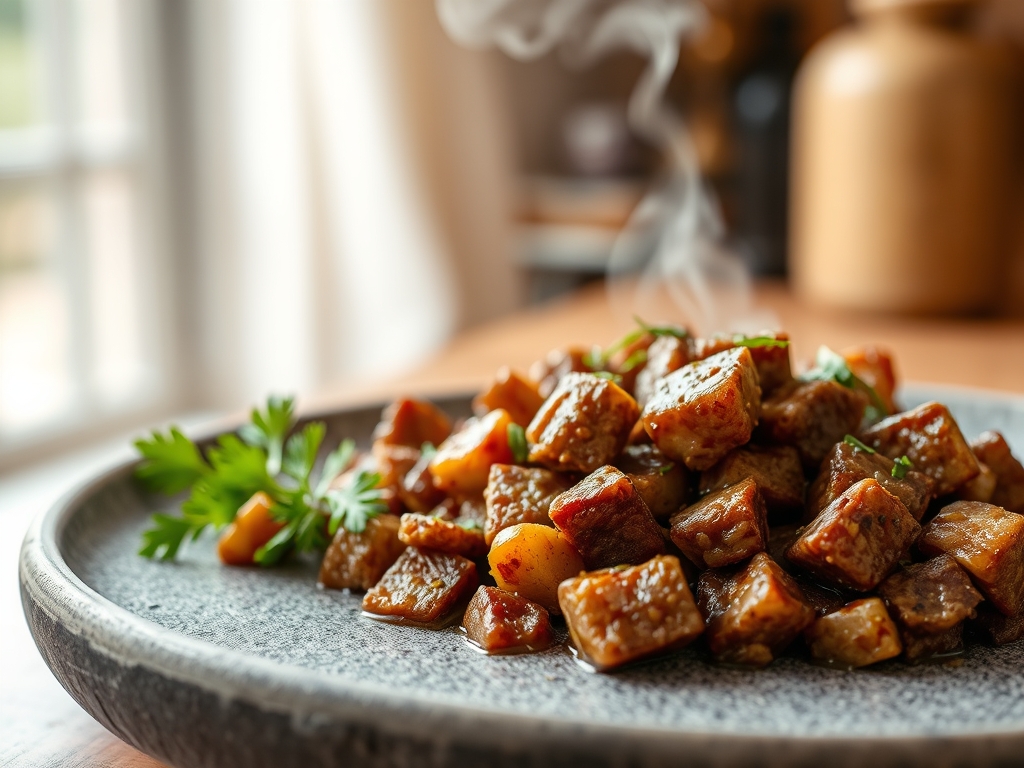
Close your eyes and imagine the scent of smoked paprika dancing with slow-rendered fat in a heavy-bottomed skillet. That is the soul of Spain. When you are searching for diced beef recipes dinner ideas that transcend the mundane Tuesday night slump, you are really looking for a hug in a bowl. Traditional Spanish beef stew, or Estofado de Ternera, is not just food; it is a masterclass in patience and molecular transformation. We are moving beyond the watery broths of your childhood. We are talking about a sauce so viscous it coats the back of a silver spoon and beef so tender it yields to a gentle nudge. This is where high-end culinary science meets the warmth of a grandmother's kitchen. We are going to build layers of flavor that feel like a sunset over Andalusia. Grab your favorite apron and a glass of Tempranillo; we are about to turn humble cubes of protein into a velvet-textured masterpiece that will make your kitchen the most popular destination in the neighborhood.
The Gathers:
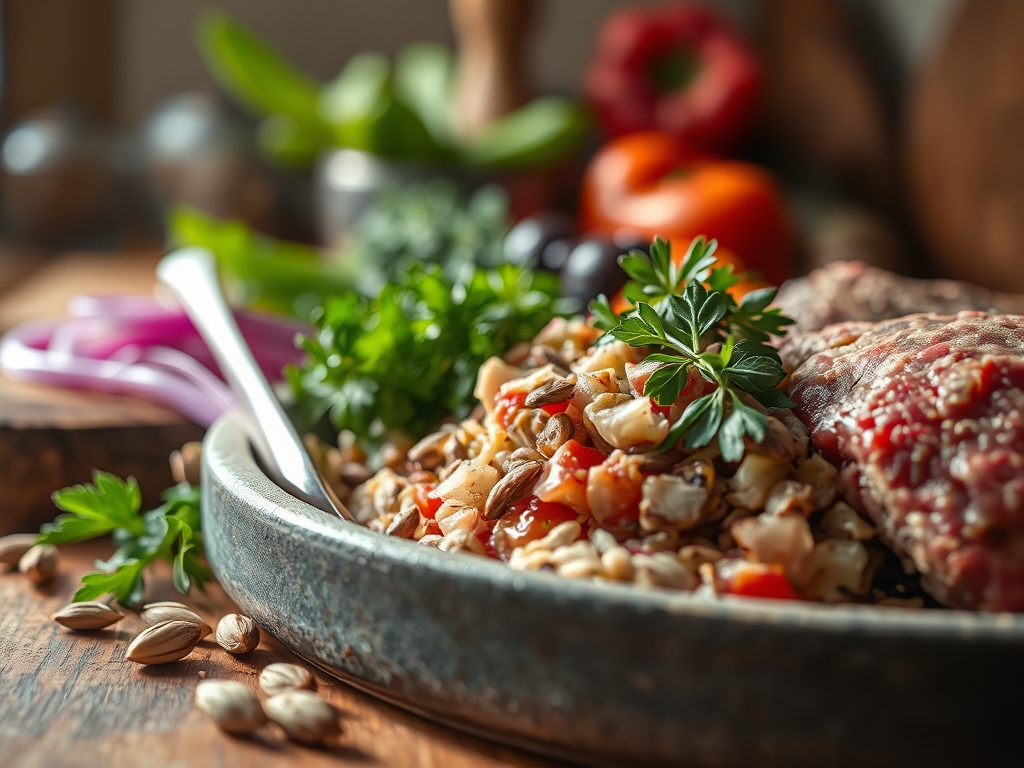
To achieve a restaurant-grade Estofado, your mise-en-place must be precise. Start with 2 pounds of grass-fed chuck roast. Use a sharp chef's knife to cut the meat into uniform 1.5-inch cubes; uniformity ensures they cook at the same rate. You will need a high-quality pimenton de la Vera (smoked paprika) to provide that signature earthy depth. Gather your aromatics: two large yellow onions, four cloves of garlic, and three carrots. For the liquid gold, you need a dry red wine and a high-gelatin beef bone broth.
Smart Substitutions: If you cannot find pimenton, a mix of chipotle powder and sweet paprika works in a pinch, though you lose the authentic Spanish terroir. If you are avoiding alcohol, replace the wine with a tablespoon of balsamic vinegar and extra broth to maintain the acidity needed to break down connective tissues. For the thickener, while traditional recipes use potatoes, a microplane-grated parsnip can add a hidden sweetness and starch that elevates the flavor profile.
The Clock
Efficiency in the kitchen is about the Chef's Flow. You should budget 30 minutes for active preparation and 2.5 to 3 hours for the slow simmer. Total time is roughly 3.5 hours.
The flow is simple: while the beef is searing, you chop your vegetables. While the vegetables are sweating, you deglaze the pan. This staggered approach ensures no time is wasted. Remember that collagen breakdown is a function of time and temperature; you cannot rush the transition from tough protein to melt-in-your-mouth perfection. Set your kitchen timer, but trust your senses more than the clock.
The Masterclass
1. The High-Heat Sear
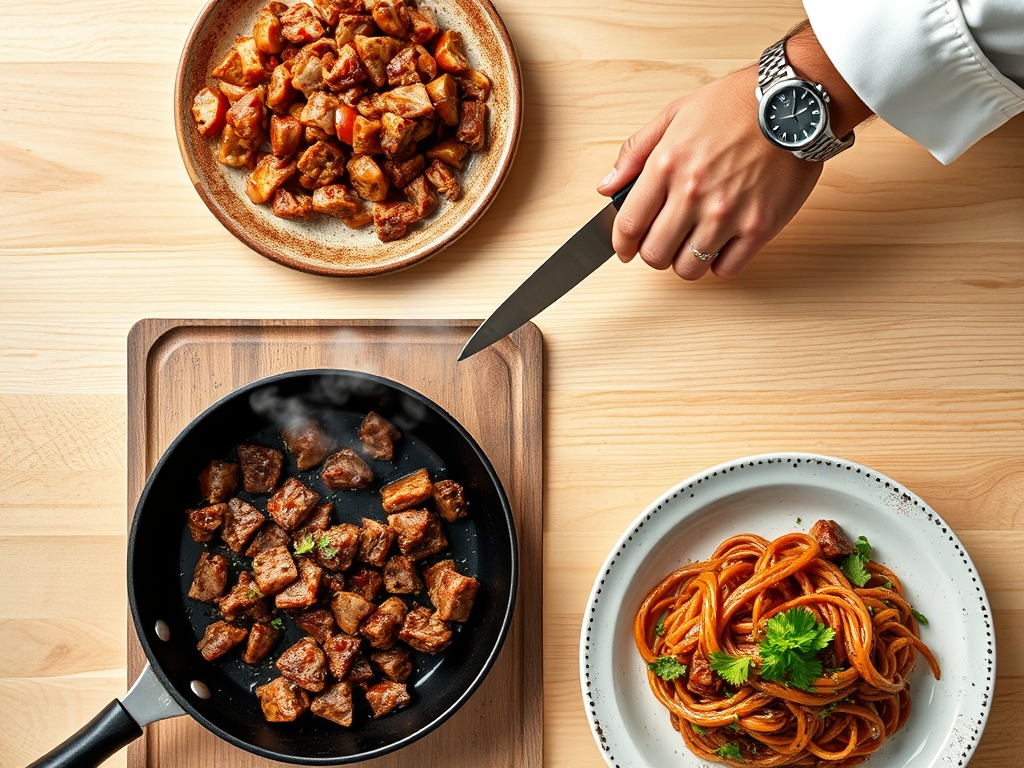
Pat your beef dry with paper towels to remove surface moisture. Dust the cubes lightly with flour and salt. Heat olive oil in a heavy-bottomed skillet until it reaches the smoke point. Sear the beef in batches, ensuring each piece has space to breathe.
Pro Tip: This stage triggers the Maillard reaction, a chemical reaction between amino acids and reducing sugars that creates hundreds of different flavor compounds. If you crowd the pan, the temperature drops and the meat steams in its own juices rather than browning, resulting in a gray, bland exterior.
2. Sweating the Sofrito
Remove the beef and add your diced onions, carrots, and peppers to the residual fat. Use a bench scraper to move your chopped veggies from the board to the pan efficiently. Cook until the onions are translucent and slightly caramelized.
Pro Tip: Sweating vegetables at a lower heat allows their cell walls to soften and release sugars without browning too quickly. This creates a sweet, structural foundation for the stew's flavor profile.
3. The Pimenton Bloom
Add your garlic and smoked paprika to the center of the pan. Stir constantly for exactly 60 seconds until the aroma fills the room.
Pro Tip: This is called blooming spices. The essential oils in the paprika are fat-soluble; heating them in the oil "wakes up" the flavor molecules, making the spice far more piquant and integrated into the final sauce.
4. Deglazing the Fond
Pour in your red wine. Use a wooden spoon or a saucier whisk to scrape up the brown bits stuck to the bottom of the pan.
Pro Tip: Those brown bits are called fond. They are concentrated flavor bombs. The alcohol in the wine acts as a solvent, dissolving these particles and incorporating them into the liquid phase of your stew.
5. The Low and Slow Simmer
Return the beef to the pan and add the beef broth until the meat is just submerged. Add a bay leaf and a sprig of thyme. Cover with a tight-fitting lid and reduce the heat to the lowest setting.
Pro Tip: Maintaining a temperature between 180 and 190 degrees Fahrenheit is crucial. This range allows collagen to denature into gelatin without boiling the muscle fibers, which would make the meat stringy and dry.
The Deep Dive
From a nutritional perspective, this stew is a powerhouse. It is rich in iron, zinc, and Vitamin B12. A standard serving contains approximately 350 calories, 35g of protein, and 12g of fat.
Dietary Swaps: For a Keto version, omit the potatoes and flour; use xanthan gum to thicken the sauce at the end. For a Vegan alternative, swap the beef for king oyster mushrooms or seitan and use a mushroom-based broth to maintain the umami depth. To keep it Gluten-Free, use cornstarch or arrowroot powder instead of all-purpose flour for the initial dusting.
The Fix-It:
- Too Salty? Drop in a peeled, halved potato for 20 minutes; it acts as a sponge for excess sodium.
- Too Thin? Remove the lid for the last 30 minutes of cooking to allow evaporation to concentrate the liquid.
- Meat is Tough? It simply needs more time. If the beef is still chewy, the collagen hasn't fully converted to gelatin yet. Keep simmering.
Meal Prep Science: This stew actually tastes better on day two. As the stew cools, the flavors continue to infuse and meld. When reheating, use a low heat on the stovetop and add a splash of water or broth to loosen the gelatinized sauce. Avoid the microwave if possible, as it can heat unevenly and toughen the beef.
The Wrap-Up
You have just mastered the art of the Spanish Estofado. By focusing on the Maillard reaction, the blooming of spices, and the slow conversion of collagen, you have elevated a simple list of ingredients into a culinary event. This isn't just another entry in your folder of diced beef recipes dinner options; it is a reliable, sophisticated technique you can return to whenever you need to impress or find comfort. Now, plate it up with some crusty bread and a sprinkle of fresh parsley. You earned this.
The Kitchen Table
Which cut of beef is best for stew?
Chuck roast is the gold standard. It contains the perfect ratio of fat and connective tissue. As it simmers, the collagen melts into gelatin, creating a rich, silky sauce and tender meat that leaner cuts like sirloin simply cannot provide.
Why is my beef stew meat tough?
If the meat is tough, you likely didn't cook it long enough or the temperature was too high. Collagen requires sustained, low heat to transform into tender gelatin. Give it more time at a very low simmer and it will soften.
Can I make this in a slow cooker?
Yes, but do not skip the searing step. Brown the beef and sauté the vegetables in a skillet first to develop the Maillard flavors. Transfer everything to the slow cooker and cook on low for 6 to 8 hours for best results.
How do I thicken the sauce without flour?
You can blend a small portion of the cooked vegetables and stir them back into the liquid. Alternatively, use a cornstarch slurry or allow the sauce to reduce uncovered during the final stages of cooking to naturally concentrate the starches and gelatin.