
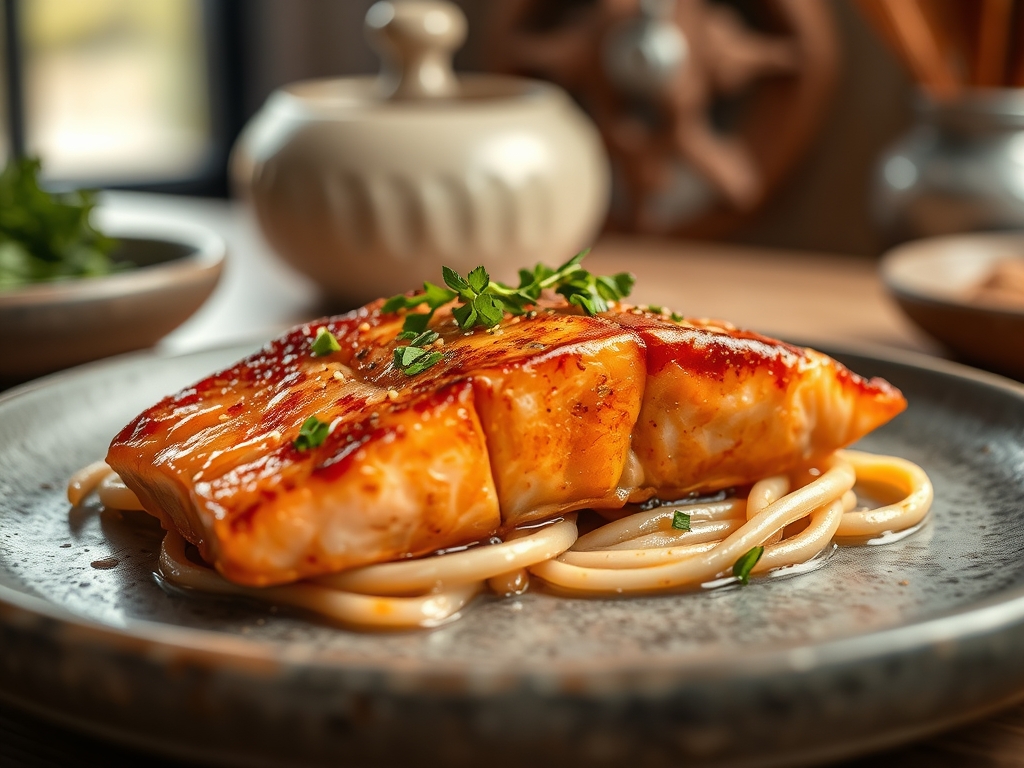
Imagine the sound of a heavy bottomed skillet meeting the flame; it is a metallic chime that signals the start of something transformative. You are standing in your kitchen, the scent of toasted sesame oil beginning to bloom in the air, ready to conquer easy chinese salmon recipes that actually deliver on their promise of restaurant quality results. We are moving beyond the basic grilled fillet and diving into a world where the skin shatters like glass and the flesh remains buttery. Salmon is the perfect canvas for the bold, fermented, and piquant profiles of the East; it has enough fat to stand up to intense heat and salt. By the time we are done, you will not just be following a recipe; you will be mastering the thermal dynamics of the perfect sear. We are going to harness the power of amino acids and sugars to create a glaze that clings to the fish like silk, ensuring every bite is an explosive balance of savory and sweet.
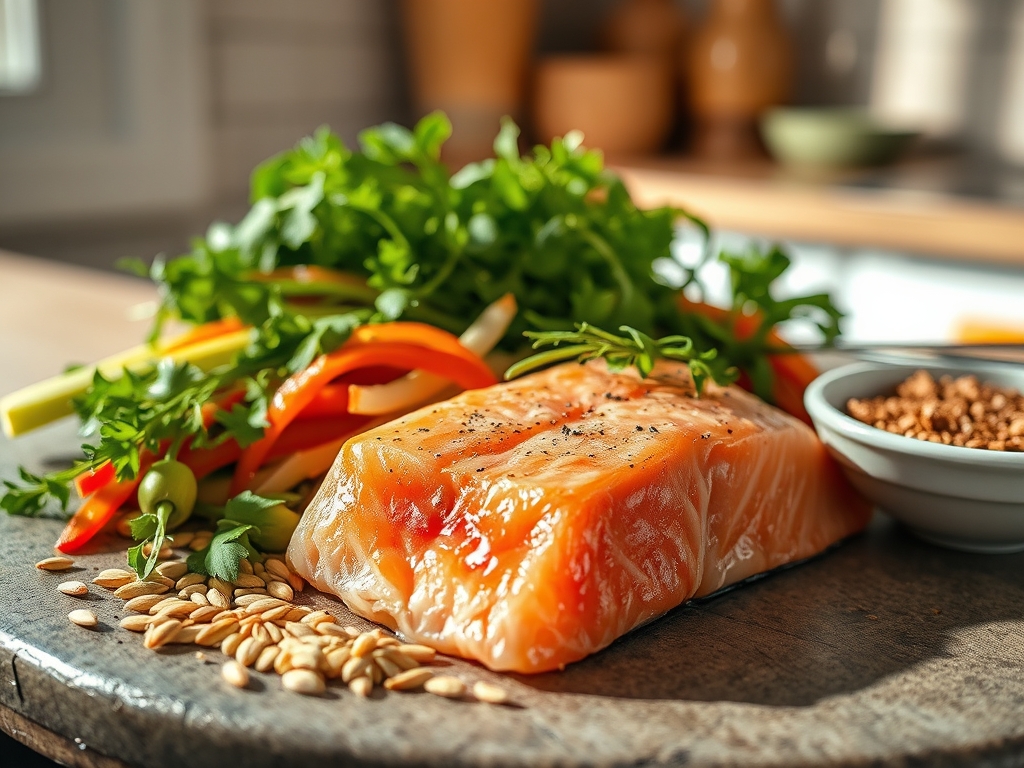
The Gathers:
To achieve a professional finish, your mise en place must be precise. Start with a center cut Atlantic or King salmon fillet; look for vibrant color and firm muscular structure. You will need high quality light soy sauce for salt and dark soy sauce for that deep, mahogany hue. Gather fresh ginger and garlic; use a microplane to grate them into a fine paste, which allows the aromatics to distribute evenly without burning. For the fat, choose a neutral oil with a high smoke point like grapeseed or avocado oil to prevent acrid flavors during the sear.
Smart Substitutions: If you are watching your sodium, coconut aminos offer a similar profile with a lower glycemic index. For a kick of heat, swap traditional dried chili for a spoonful of Chiu Chow chili oil to add complexity. If you lack Shaoxing wine, a dry pale sherry is a chemically similar substitute that provides the necessary acidity to cut through the fish oil. Always use a digital scale to measure your liquid aromatics; consistency is the hallmark of a great home chef.
The Clock
The beauty of these easy chinese salmon recipes lies in the efficiency of the "Chef's Flow." Total active preparation time is approximately 10 minutes, with a cooking window of 8 to 12 minutes depending on the thickness of your fillets. The "Flow" involves prepping your aromatics while the salmon sits at room temperature for 15 minutes. This ensures even heat distribution. While the fish rests post-sear, you will use the residual heat of the pan to reduce your sauce. This overlapping timeline ensures that nothing sits getting cold or soggy.
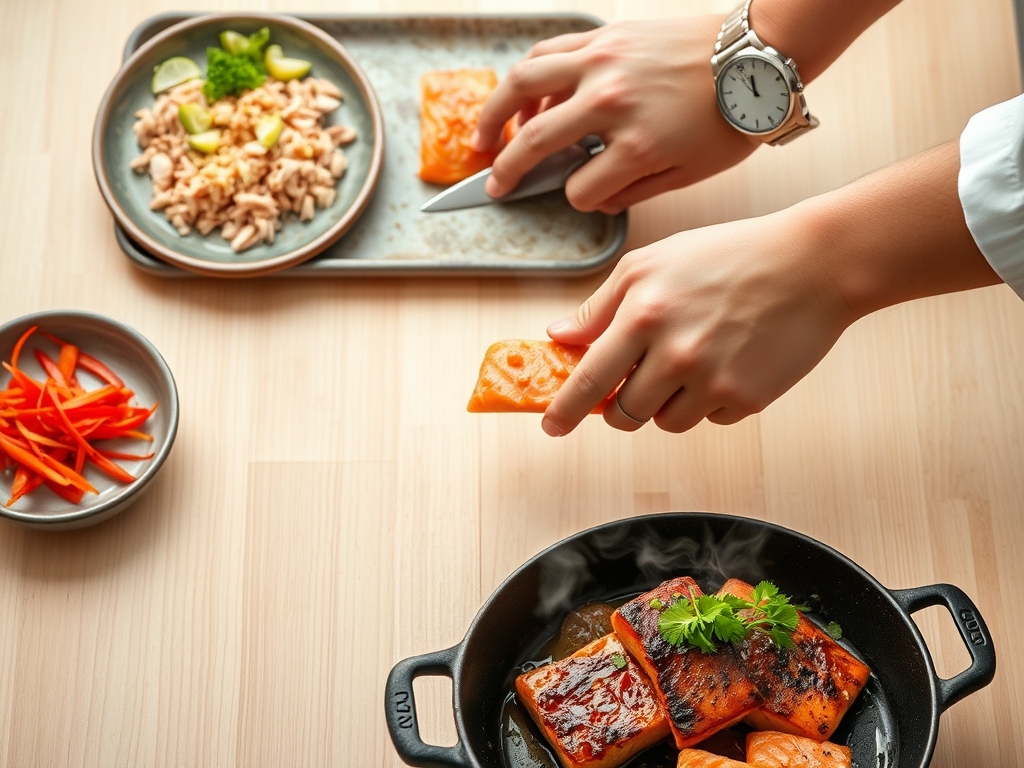
The Masterclass
1. The Moisture Purge
Pat the salmon skin dry with a paper towel until it is bone dry. Use a bench scraper to gently press any remaining moisture out of the surface. Season only the flesh side with salt initially; salting the skin too early can draw out moisture and prevent crisping.
Pro Tip: This step utilizes the principle of evaporative cooling. If there is water on the skin, the pan's energy goes into boiling that water rather than searing the protein, resulting in rubbery skin.
2. Cold Pan Start for Rendering
Place the salmon skin side down in a cold heavy bottomed skillet with a teaspoon of oil, then turn the heat to medium high. As the pan heats, the fat under the skin begins to render slowly, ensuring a thin, cracker like texture.
Pro Tip: A cold start prevents the protein fibers from seizing up instantly, which often causes the fish to curl. This allows for more even thermal conduction through the skin layer.
3. The Weight Technique
Use a heavy spatula or a dedicated kitchen weight to press the fillet down for the first 60 seconds. This ensures the entire surface area of the skin maintains contact with the hot metal.
Pro Tip: This prevents the natural contraction of collagen fibers from lifting the center of the fillet away from the heat, ensuring a uniform Maillard reaction across the base.
4. Aromatics Infusion
Once the skin is crispy, use tongs to flip the fish. Toss in your grated ginger, garlic, and white parts of green onions. Let them sizzle in the rendered salmon fat for 30 seconds until fragrant but not browned.
Pro Tip: Fat is a solvent for flavor. The essential oils in the ginger and garlic are fat soluble, meaning they infuse into the oil and then permeate the fish more effectively than if they were added to a water based sauce.
5. Deglazing the Pan
Pour in your mixture of soy sauce, honey, and Shaoxing wine. Use a saucier or a whisk to scrape up any browned bits from the bottom of the pan. The liquid will bubble vigorously as it hits the hot surface.
Pro Tip: This is deglazing. Those browned bits are concentrated umami; by dissolving them back into the liquid, you are intensifying the flavor profile through molecular integration.
6. The Glaze Reduction
Baste the salmon continuously with the bubbling sauce using a large spoon. The sugars in the honey will begin to caramelize, causing the liquid to become viscous and glossy.
Pro Tip: As water evaporates, the concentration of solutes increases. This creates a reduction that coats the fish without the need for thickeners like cornstarch, which can dull the flavors.
7. The Carryover Rest
Remove the salmon when the internal temperature hits 125 degrees Fahrenheit for medium rare. Place it on a warm plate and let it rest for 3 minutes before serving.
Pro Tip: This accounts for thermal carryover. The internal temperature will rise by 5 to 7 degrees while resting, ensuring the center is perfectly flaky and moist rather than overcooked and chalky.
The Deep Dive
From a macro perspective, salmon is a powerhouse of Omega 3 fatty acids and high quality protein. One 6 ounce fillet provides roughly 34 grams of protein and 18 grams of healthy fats. For a Keto version, replace the honey with an erythritol based sweetener. For Gluten Free needs, ensure you use Tamari instead of standard soy sauce.
The Fix-It:
- Skin sticking? You likely tried to flip it too early. The fish will naturally release from the pan once the proteins have fully denatured and browned.
- Sauce too salty? Add a splash of rice vinegar or a squeeze of lime. The acidity will mask the salt perception without changing the sodium content.
- White gunk appearing? This is albumin, a protein that leaches out when salmon is cooked too fast at too high a temperature. Lower your heat slightly next time.
Meal Prep: To reheat salmon without it smelling "fishy," avoid the microwave. Instead, wrap it in foil with a teaspoon of water and heat it in a toaster oven at 275 degrees. This creates a gentle steam environment that rehydrates the proteins.
The Wrap-Up
You now have the technical blueprint for the ultimate easy chinese salmon recipes. By focusing on moisture control, fat rendering, and the science of the reduction, you have elevated a simple weeknight meal into a culinary event. Remember that the best cooking is a blend of intuition and physics. Don't be afraid to let that sauce get dark and sticky; that is where the magic happens. Grab your favorite chopsticks, pile on some fresh cilantro, and enjoy the fruits of your scientific labor.
The Kitchen Table
How do I get the skin extra crispy?
The secret is a bone dry surface and a cold pan start. By slowly rendering the subcutaneous fat, you allow the skin to fry in its own oils, creating a glass like texture that stays crunchy even under a thick glaze.
Can I use frozen salmon for this?
Yes, but you must thaw it completely in the refrigerator and pat it dry with extreme care. Frozen fish often releases more moisture, so you may need to sear it slightly longer to achieve the same Maillard effect.
What side dishes pair best with Chinese salmon?
Keep it simple with steamed bok choy or garlicky green beans. The acidity and crunch of the vegetables provide a necessary contrast to the rich, fatty profile of the glazed salmon and the salty umami of the soy sauce.
Is it okay if the salmon is pink in the middle?
Absolutely. High quality salmon is best enjoyed at medium rare or medium. Overcooking leads to a dry, fibrous texture. Aim for an internal temperature of 130 degrees Fahrenheit after resting for the most succulent results.